Pennies Today, Thousands Tomorrow: The True Price of Amateur Foundation Fixes
There is an understandable impulse behind the do-it-yourself approach to home maintenance. Hardware store shelves are stocked with products that promise to seal cracks, shore up settling concrete, and stabilize shifting soil — all at a fraction of what a structural engineer might quote. For routine household repairs, this logic holds. For foundation work, it can be financially devastating.
At Willow Branch Stabilization, our field teams regularly assess properties where well-intentioned homeowners have spent hundreds — sometimes thousands — of dollars on temporary remedies, only to discover that those interventions concealed a worsening problem rather than resolving it. The pattern is consistent enough that our engineers have come to recognize it as one of the most predictable cost multipliers in residential structural care.
Why Foundations Fail in the First Place
Before understanding why DIY repairs compound problems, it helps to understand what actually causes foundation distress. In most cases across the United States, the culprit is not the concrete or masonry itself — it is the soil beneath it.
Expansive clay soils, common throughout Texas, Oklahoma, and the Mid-Atlantic states, shrink and swell dramatically with moisture fluctuations. Poor drainage channels water toward a structure's footprint rather than away from it. Tree roots draw moisture unevenly from the soil, creating differential settlement. In older neighborhoods, deteriorating underground utility lines contribute to localized erosion that undermines bearing capacity from below.
These are geotechnical and hydrological problems. A tube of polyurethane sealant addresses none of them.
The Most Common DIY Missteps
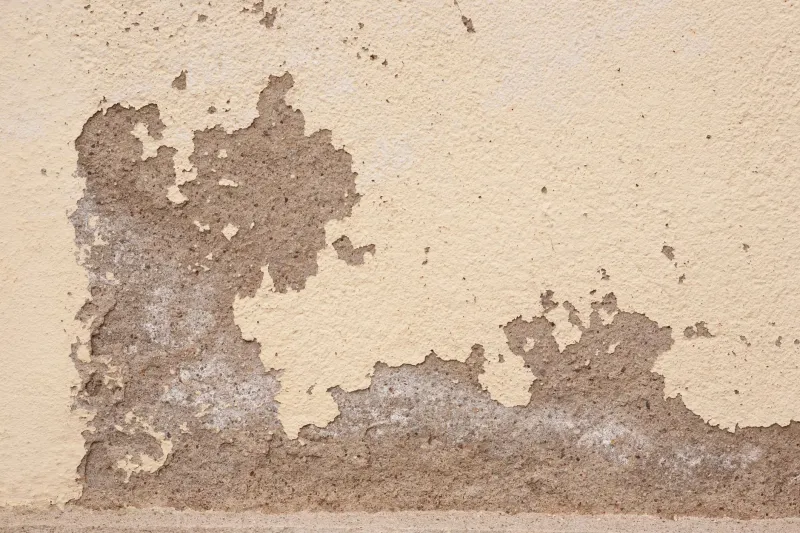
Surface crack filling without void investigation. When a homeowner notices a diagonal crack running from a window corner toward the floor, the immediate visual priority is the crack itself. Products like hydraulic cement or epoxy injection kits are marketed as straightforward solutions. What they cannot do is reveal whether that crack is the visible symptom of a void forming beneath the slab, a failing pier, or active soil movement. Sealing the surface traps moisture, prevents accurate monitoring of crack progression, and gives the homeowner false confidence that the issue has been resolved.
Improper use of mudjacking or foam lifting products. Consumer-grade expanding foam products have entered the DIY market, offering a seemingly affordable alternative to professional slab lifting. Without precise pressure control and a thorough understanding of the soil profile, however, amateur foam injection frequently creates uneven lifting, damages plumbing lines embedded in or beneath the slab, and introduces voids in adjacent areas as displaced soil redistributes.
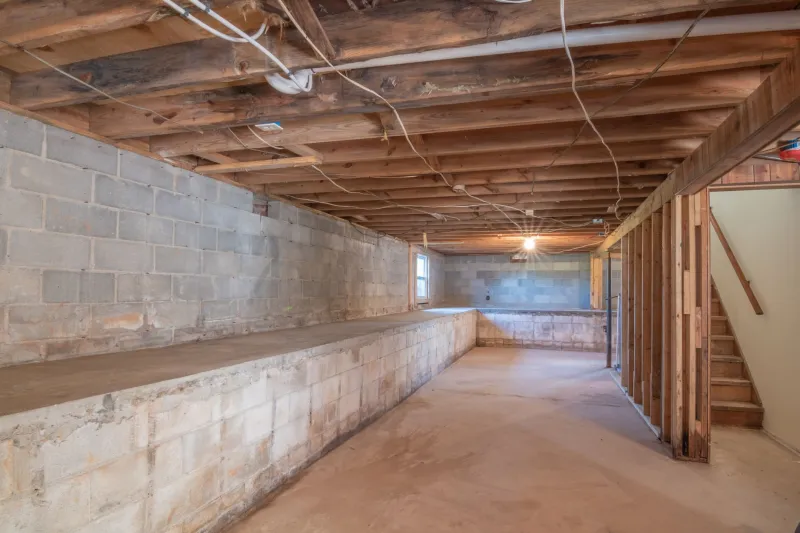
Waterproofing the interior without addressing exterior drainage. Interior sealants applied to basement walls may reduce visible moisture intrusion for a season or two. They do nothing to relieve hydrostatic pressure building against the exterior of the wall. In documented cases, this pressure eventually causes wall bowing, horizontal cracking, and in severe instances, inward wall failure — outcomes that require far more extensive structural remediation than the original drainage correction would have demanded.
Shimming and blocking pier and beam foundations. Owners of older pier and beam homes sometimes attempt to address sagging floors by inserting shims or stacking concrete blocks beneath beam supports. This approach ignores why the original piers shifted — typically soil moisture changes or wood deterioration — and introduces new load concentrations that can accelerate failure in adjacent areas.
A Case Study in Compounding Costs
Consider a property in a suburb of Nashville, Tennessee, where the owner noticed stair-step cracking in the brick veneer along the rear of the home in 2019. Rather than scheduling a professional evaluation, he purchased a masonry crack repair kit and spent a weekend repointing the affected joints. The repair held cosmetically through the following summer.
By 2021, the cracking had returned — now extending further along the wall and appearing at interior door frames. A structural assessment at that point revealed that the original cracking had been caused by differential settlement in the corner of the foundation, driven by a slow plumbing leak that had been saturating the underlying clay soil for an estimated eighteen months. The masonry repair had obscured the visual evidence that would have prompted earlier intervention.
The remediation scope in 2021 included underpinning with helical piers, plumbing line repair, and partial interior reframing around two door openings that had racked beyond adjustment. Total professional repair cost: approximately $28,400. A geotechnical evaluation and targeted underpinning in 2019, before the plumbing leak fully destabilized the bearing soil, was estimated by our engineering team to have cost between $8,500 and $11,000 at that time.
The DIY masonry patch cost $47 in materials.
How Temporary Fixes Mask Diagnostic Information
One of the least-discussed consequences of amateur foundation intervention is the loss of diagnostic clarity. Foundation engineers rely heavily on crack pattern analysis — the direction, width, and progression of cracks — to identify the type and location of movement occurring beneath a structure. When cracks are filled, painted over, or obscured by surface treatments, this diagnostic record is erased.
Re-cracking through a repaired joint tells an engineer that movement is ongoing, but the original crack geometry — which might have indicated a specific failing pier or a localized drainage issue — is no longer visible. This forces engineers to rely more heavily on invasive investigation methods, adding both time and cost to the assessment process.
The Compounding Effect Over Time
Foundation distress, left unaddressed or cosmetically masked, does not remain static. Soil conditions that cause initial settlement continue to evolve. A pier that has begun to fail will continue to fail. A drainage deficiency that directed water toward a foundation in one wet season will do so again — and again.
Industry data consistently indicates that homeowners who delay professional intervention by two or more years following visible foundation symptoms spend, on average, two to three times more on eventual repairs than those who sought evaluation promptly. When DIY interventions are layered into that delay, the multiplier climbs further, as engineers must first diagnose what was done, assess any collateral damage from the amateur repair, and then address the original underlying condition.
What Responsible Ownership Actually Looks Like
None of this is an argument against homeowner attentiveness. Quite the opposite. The most structurally sound properties are owned by people who notice early warning signs, document them carefully — photographs with date stamps are invaluable — and contact a qualified structural engineer or foundation specialist before reaching for a hardware store solution.
A professional evaluation provides something no consumer product can: an accurate diagnosis of what is actually occurring beneath your home and a prioritized plan for addressing it. In many cases, that evaluation reveals that conditions are less urgent than feared. In others, it identifies problems that, caught early, carry a fraction of the cost they would demand after years of unmonitored progression.
At Willow Branch Stabilization, we have built our practice on the belief that informed property owners make better decisions — and that solid ground, once properly established, provides lasting structural security. The foundation beneath your home is not a candidate for improvisation. It is the single most consequential structural system your property contains, and it deserves the same professional attention you would give to any other critical infrastructure.
The cost of doing it right the first time is almost always less than the cost of doing it twice.