What Your Basement Walls Are Trying to Tell You: A Homeowner's Guide to Reading Below-Grade Warning Signs
The Walls Know Something You Don't
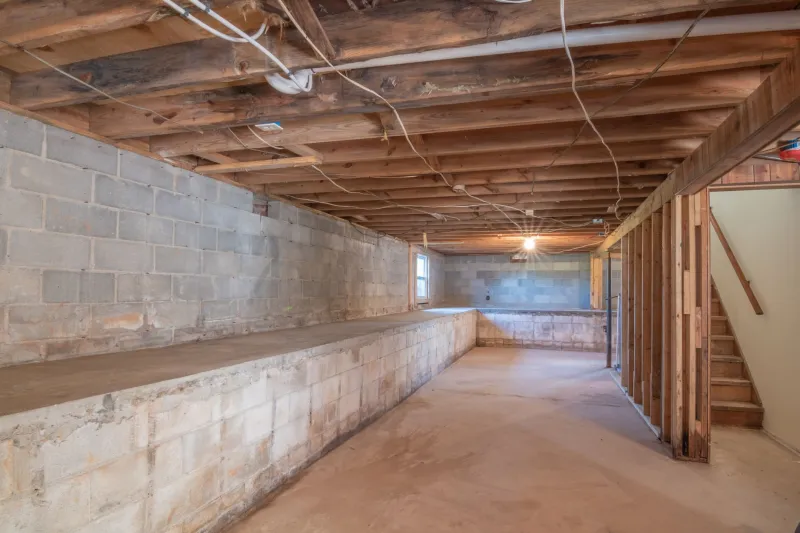
Most homeowners treat their basements as utilitarian spaces—storage areas, laundry rooms, perhaps a finished recreation room. The walls enclosing those spaces, however, are constantly registering and responding to forces that the surrounding soil exerts around the clock. Hydrostatic pressure, expansive clay movement, freeze-thaw cycling, and long-term settlement all leave their signatures on below-grade masonry and concrete. Learning to read those signatures early is one of the most valuable skills a homeowner can develop.
This guide walks through the specific indicators your basement walls produce under stress, explains what each pattern means in structural terms, and outlines a systematic inspection approach that requires no specialized equipment—only attention, a flashlight, and a willingness to look carefully.
Efflorescence: The White Residue That Carries a Message
That chalky, white or grayish powder appearing on your basement walls is called efflorescence. It forms when water migrates through concrete or masonry, dissolves soluble salts within the material, and then deposits those salts on the surface as the moisture evaporates. Efflorescence itself is not structurally dangerous, but it is an unambiguous indicator that water is actively moving through your wall assembly.
Pay close attention to the pattern. A uniform horizontal band of efflorescence near the base of the wall suggests consistent water infiltration from the footing level—often a sign of inadequate drainage or a compromised perimeter drain tile system. Vertical streaking, on the other hand, may point to localized cracks, mortar joint failure, or construction cold joints where two pours of concrete met imperfectly. Patches that grow and recede seasonally are telling you that soil moisture levels around your foundation fluctuate significantly, which itself places cyclical stress on the wall.
Do not simply scrub efflorescence away and consider the matter resolved. Document its location with photographs and note whether it returns after cleaning. Recurrence confirms active water movement and warrants a more thorough investigation.
Moisture Streaking and Staining: Mapping the Water's Path
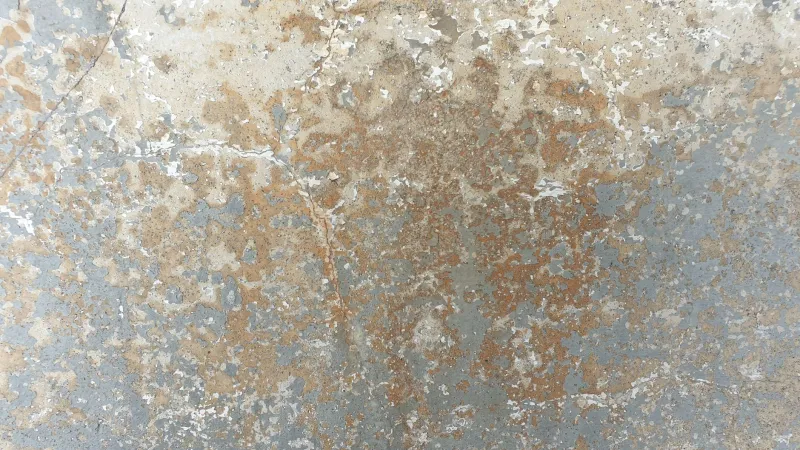
Beyond efflorescence, look for darker staining patterns—brown, rust-colored, or gray streaks running vertically or diagonally across the wall surface. Iron oxide staining (rust streaks) often indicates that embedded rebar or tie wire within the concrete is oxidizing due to persistent moisture exposure. This is a more serious finding than mineral deposits alone, because steel corrosion expands the metal and can fracture the surrounding concrete from within over time.
Horizontal staining at a consistent elevation along multiple walls may mark a historic high-water event—a period when groundwater or surface runoff reached that level and held. If that stain line sits above your floor slab, your basement has experienced hydrostatic flooding conditions at some point in its history. Understanding that history helps you assess current risk accurately.
Bowing and Deflection: When the Wall Begins to Move
Soil exerts lateral pressure against basement walls continuously. In well-designed, properly constructed foundations, the wall is engineered to resist that pressure. When drainage fails, when expansive soils swell with moisture, or when the original construction was marginal, that lateral load can begin to overwhelm the wall's resistance.
The result is bowing—a subtle inward deflection that most homeowners never notice because it develops slowly over years. To check for it, hold a long straightedge (a level or a taut string line works well) horizontally against the wall at mid-height and look for a gap between the straightedge and the wall surface. Even a quarter-inch of inward deflection is worth documenting. A full inch or more represents a condition that warrants professional evaluation without delay.
Also examine block walls specifically for stair-step cracking along mortar joints. This pattern, where cracks follow a diagonal staircase path through the joints rather than cutting straight through the blocks themselves, is a classic indicator of differential settlement or sustained lateral pressure. It tells you the wall is attempting to redistribute load in ways it was not designed to handle.
Acoustic Changes: The Sound of Structural Stress
This is perhaps the least discussed inspection technique, yet it is remarkably accessible. Walk slowly along your basement walls and knock firmly on the surface with your knuckles at regular intervals. A healthy, solid concrete or block wall will return a dense, consistent sound. A hollow or drum-like sound in a localized area may indicate that the wall has separated from the surrounding soil—a condition called voids or loss of backfill contact—or that delamination has occurred within the wall material itself.
Voids behind a basement wall are particularly concerning because they eliminate the passive soil resistance that helps the wall remain stable. Without that earth contact, the wall is effectively cantilevered from the footing with no lateral support, which dramatically increases its vulnerability to further movement.
Conducting a Systematic Inspection
A thorough below-grade inspection does not need to be complicated, but it does need to be methodical. Begin by clearing the perimeter of stored items so you can access the full wall surface. Work your way around the basement in a single direction, inspecting each wall from floor to ceiling. Use a flashlight held at a low angle to the wall surface—this raking light technique causes even shallow cracks and surface irregularities to cast visible shadows, making them far easier to detect than under direct overhead lighting.
Document everything with dated photographs. Note the width of any cracks (a simple crack gauge, available at hardware stores for a few dollars, is useful here), the location of moisture staining, and any areas where the wall surface feels damp to the touch. Repeat this inspection at least twice per year—once in late spring after the wet season, and again in late fall before ground freeze. Comparing your records over time reveals whether conditions are stable, improving, or actively worsening.
When Monitoring Is Sufficient—and When It Isn't
Not every basement wall imperfection demands immediate professional intervention. Hairline shrinkage cracks that have remained unchanged for years, minor efflorescence in a single localized area, or slight surface spalling on an otherwise sound wall may reasonably be monitored rather than repaired urgently.
However, certain findings place the situation beyond the homeowner's capacity to manage alone. Visible inward bowing of any measurable degree, horizontal cracking running the length of a wall, stair-step cracking that has widened since your last inspection, or any crack wide enough to insert a credit card into—these are conditions that require a qualified structural engineer or foundation specialist to assess. The cost of a professional evaluation is modest compared to the cost of deferred intervention on an actively failing wall.
The Value of Early Literacy
At Willow Branch Stabilization, we frequently encounter homeowners who describe noticing something "off" about their basement years before they sought help—a damp smell that came and went, a white powder that kept reappearing, a wall that seemed "a little funny." In many of those cases, early professional engagement would have permitted simpler, less expensive remediation.
Your basement walls are not silent. They are communicating through a consistent vocabulary of physical evidence. Learning that language is not a matter of specialized expertise—it is a matter of paying attention and knowing what to look for. The inspection framework outlined here gives you the tools to begin that practice today, and to recognize the moment when what you are observing requires more than observation alone.