Silent Subsidence: How Undetected Soil Settlement Quietly Erodes Your Property's Structural Future
Soil settlement rarely announces itself with drama. It advances incrementally, concealed beneath floors and behind walls, until the financial consequences become unavoidable. For homeowners and commercial facility managers alike, understanding the mechanics of subsidence—and recognizing its earliest indicators—can mean the difference between a modest remediation expense and a six-figure structural overhaul.
At Willow Branch Stabilization, we have documented this pattern across hundreds of properties throughout the United States. The conclusion is consistent: early detection is not merely advantageous—it is financially transformative.
What Is Soil Settlement, and Why Does It Happen?
Soil settlement occurs when the ground beneath a structure compresses, shifts, or erodes in ways that reduce its load-bearing capacity. The result is a gradual, uneven descent of the foundation, which transmits stress upward through every connected structural element.
Several geological and environmental factors accelerate this process in American properties:
- Expansive clay soils, prevalent across Texas, Oklahoma, Colorado, and much of the Southeast, swell dramatically when wet and contract sharply during drought cycles. This repeated volumetric change weakens the soil matrix over time.
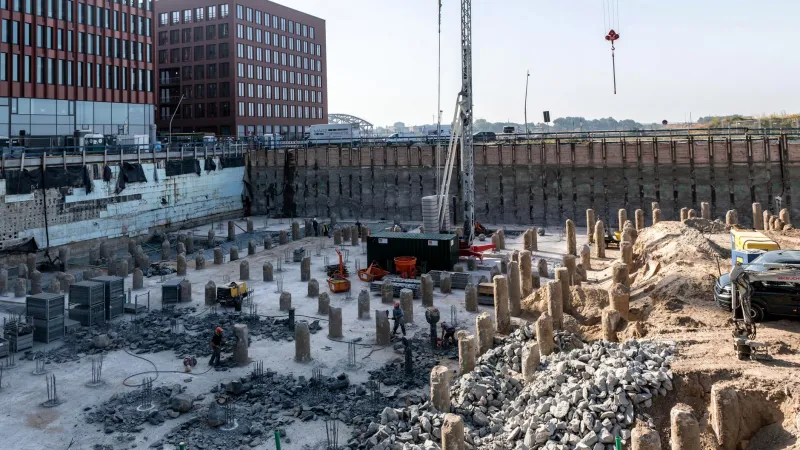
- Poorly compacted fill material, commonly placed during rapid residential development, lacks the density needed to support sustained structural loads.
- Organic decomposition in soils that contain peat, wood debris, or other biological matter creates voids as organic material breaks down.
- Hydrostatic pressure and erosion from inadequate drainage gradually displace fine soil particles, leaving subsurface cavities.
- Regional seismic activity and vibration, even at low intensities, can consolidate loose soils beneath foundations.
None of these forces operate visibly. They work in the dark, beneath concrete slabs, pier systems, and footings, accumulating structural debt that eventually demands repayment.
The Warning Signs Most Property Owners Miss
The challenge with soil settlement is that its surface expressions are frequently misattributed to cosmetic aging or routine wear. By the time a property owner consults a structural engineer, the underlying condition has often been active for years.
The following indicators warrant immediate professional evaluation:
In residential properties:
- Doors or windows that stick, bind, or no longer close squarely within their frames
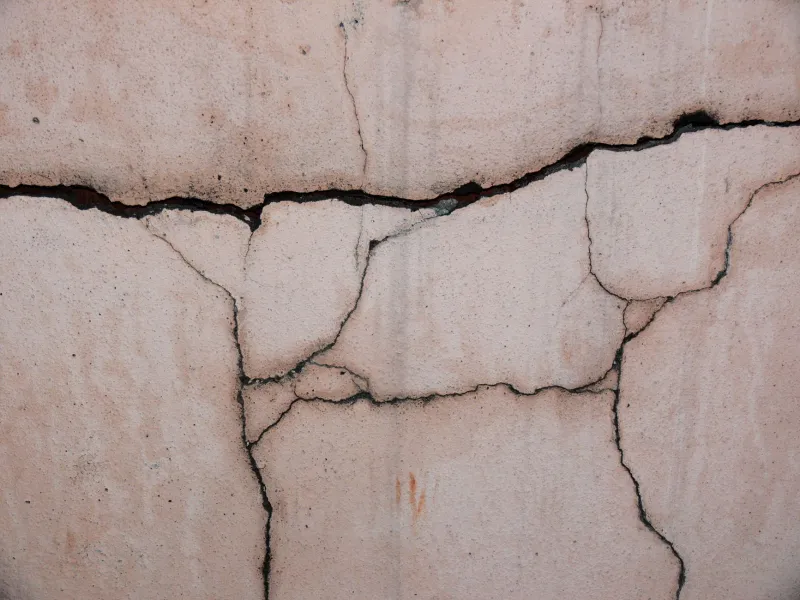
- Diagonal cracks emanating from the corners of door and window openings
- Visible gaps between baseboards and the floor, or between crown molding and the ceiling
- Floors that slope perceptibly or feel soft and springy underfoot
- Cracks in drywall that recur after patching
- Separation between exterior brick veneer and adjacent trim or framing
In commercial structures:
- Uneven concrete slabs in warehouse or retail floors
- Cracking along masonry facades or curtain wall assemblies
- Misaligned loading dock surfaces
- Differential settlement visible between building sections or additions
- Persistent water intrusion in basement or below-grade spaces
Each of these signals, taken individually, might appear minor. Taken together, they form a diagnostic picture that experienced structural professionals recognize immediately.
Case Study: A Residential Property in the Dallas–Fort Worth Metroplex
Consider a single-family home constructed in the late 1990s on expansive clay soil in a suburban Dallas community. The homeowners noticed that their master bedroom door had begun sticking in the summer months. They attributed the issue to humidity-related wood expansion—a reasonable assumption—and took no action.
Over the following three years, hairline cracks appeared above two windows on the home's north side. A tile floor in the kitchen developed a subtle but perceptible low point near the exterior wall. A neighbor mentioned that their foundation had been repaired the previous spring.
When the homeowners finally engaged a foundation specialist, the assessment revealed differential settlement of approximately two and a half inches across the front-left corner of the foundation. Pier installation, crack remediation, and interior leveling totaled just under $18,000.
Had the family acted when the door began sticking—approximately three years earlier—soil stabilization injections and minor drainage correction would likely have resolved the condition for under $4,500. The delay cost them more than $13,000 in avoidable expense, to say nothing of the stress of negotiating the repair during an active home sale process.
Case Study: A Retail Strip Center in the Mid-Atlantic Region
A commercial property owner managing a ten-unit retail strip center in suburban Maryland noticed that one tenant had reported difficulty opening a rear service door. Maintenance staff adjusted the door hardware twice over eight months. No structural assessment was commissioned.
Eighteen months later, a visible step crack had developed in the masonry along the building's rear elevation, and two tenants reported water intrusion following heavy rain events. An engineering investigation revealed that a formerly undocumented drainage swale had been partially redirected during a neighboring parking lot repaving project two years prior, channeling stormwater toward the building's east foundation wall.
The resulting remediation—including underpinning of three column footings, exterior waterproofing, and masonry repointing—exceeded $74,000. A proactive drainage assessment and soil stabilization treatment, had it been initiated when the door issue first appeared, was estimated at approximately $9,000.
The financial disparity is stark, but it is representative of what structural engineers encounter routinely across commercial real estate portfolios.
The Exponential Cost Curve of Deferred Action
Structural repair costs do not escalate linearly with time. They compound. When soil settlement advances unchecked, the consequences branch outward: foundation elements shift, framing members absorb stress they were not designed to carry, and utility systems—plumbing, HVAC ductwork, electrical conduit—experience strain at connection points.
An intervention that costs $5,000 in year one may cost $25,000 in year three and $80,000 or more in year five, once secondary damage is factored into the scope. Insurance policies frequently exclude damage attributed to "earth movement" or "settling," meaning property owners bear the full financial burden of delayed response.
For commercial operators, the calculus is even more consequential. Tenant disruption, temporary closure costs, liability exposure, and diminished property valuation compound the direct repair expense in ways that can affect a building's long-term investment performance.
A Practical Monitoring Checklist for Property Owners and Facility Managers
Systematic observation is the most accessible tool available to non-specialists. The following checklist is recommended on a seasonal basis—particularly following significant rainfall events, extended dry periods, and winter freeze-thaw cycles:
Exterior Inspection:
- Walk the perimeter and note any new or widened cracks in foundation walls, masonry, or stucco
- Check that soil grades slope away from the structure at all points
- Inspect downspout discharge locations and confirm water is directed at least six feet from the foundation
- Look for standing water near the building within 24 hours of rainfall
- Note any visible separation between the structure and adjacent flatwork (sidewalks, driveways, patios)
Interior Inspection:
- Test all exterior-facing doors and windows for smooth operation
- Walk each room and note any floor slope or unevenness
- Inspect drywall, particularly at wall-ceiling junctions and above door frames
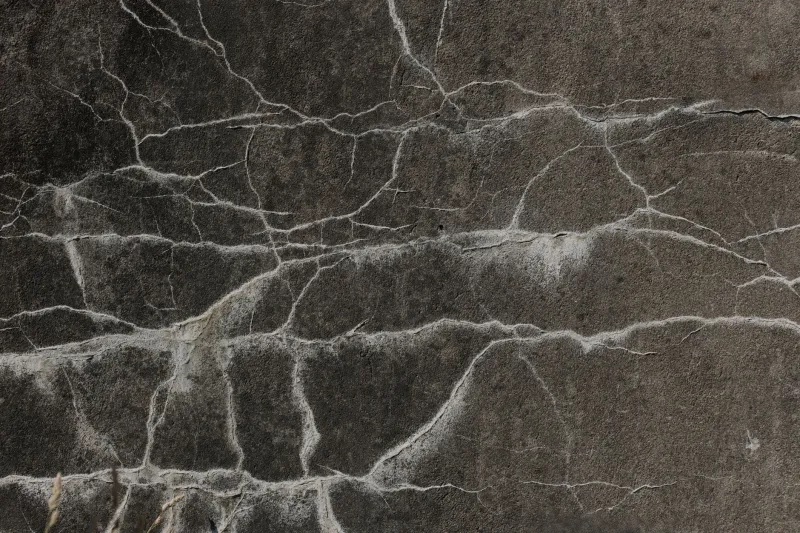
- Check basement or crawl space walls for efflorescence (white mineral deposits), cracking, or moisture
- Photograph any cracks and date the images to track progression over time
Documented observations shared with a structural professional allow for meaningful trend analysis—a far more reliable assessment tool than a single-point inspection.
The Case for Proactive Engagement
The willow tree, for which this company draws its identity, survives and stabilizes because its root system responds continuously to the conditions of the ground beneath it. It does not wait for crisis. Property owners and facility managers who adopt the same orientation—monitoring, responding early, and investing in preventive stabilization—consistently realize better structural outcomes and substantially lower lifetime maintenance costs.
Soil settlement is not an anomaly. It is a predictable consequence of geology, climate, and time. What distinguishes properties that remain sound from those that require major intervention is almost always the same variable: how soon the condition was recognized and addressed.
If your property is displaying any of the indicators described in this article, we encourage you to schedule a professional structural assessment before the ground beneath you makes the decision for you.