From Hairline to Hazard: The True Financial Cost of Ignoring Small Foundation Cracks Over a Decade
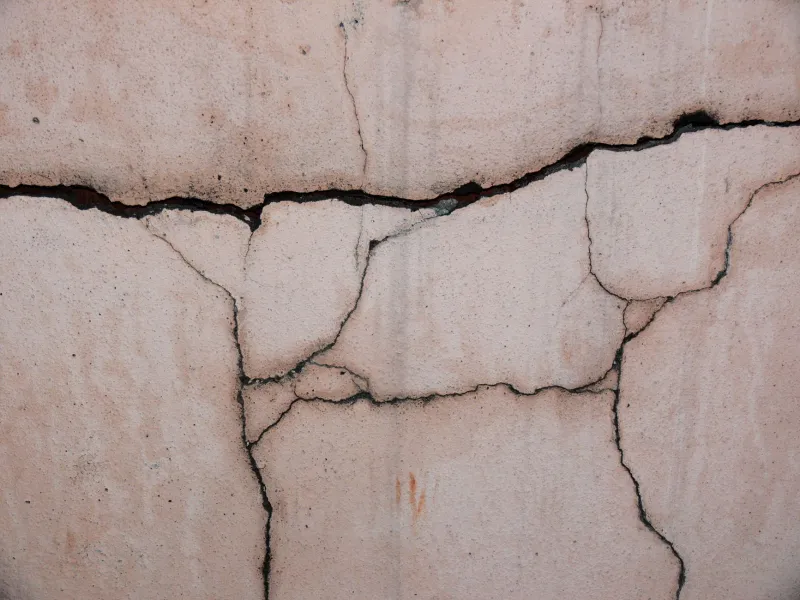
It begins as a thin line — barely the width of a credit card — running diagonally from the corner of a basement window. Most homeowners notice it, make a mental note, and move on. After all, it does not appear to be leaking. Nothing is visibly collapsing. The house feels solid underfoot. This reasoning is understandable. It is also, from a structural and financial standpoint, a costly error.
At Willow Branch Stabilization, we have assessed thousands of residential foundations across the United States. One pattern emerges with remarkable consistency: the homeowners who face the largest repair bills are rarely those who experienced catastrophic events. They are, overwhelmingly, those who monitored a small problem for years without acting on it. The following analysis examines what ten years of inaction typically costs — and why the math so strongly favors early intervention.
Stage One: The Hairline Crack (Year 1–2)
Estimated repair cost at this stage: $500–$2,500
Hairline cracks, defined as fractures narrower than 1/16 inch, are among the most common findings in residential foundations. They frequently result from normal concrete curing shrinkage, minor seasonal soil movement, or slight differential settlement during a home's early years. In isolation, many hairline cracks are structurally benign.
However, the critical distinction lies in their trajectory. A crack that is stable and non-widening presents minimal risk. One that is actively growing — even by fractions of an inch per season — signals ongoing soil instability or structural stress that will not self-correct.
At this stage, repair options are straightforward and relatively inexpensive. Epoxy or polyurethane injection can seal the crack, restore tensile strength to the concrete, and prevent water intrusion. If underlying soil movement is identified, targeted stabilization measures such as helical piers or soil grouting may be recommended. Total investment at this stage typically ranges from a few hundred to a few thousand dollars, depending on the scope of intervention needed.
What most homeowners do instead: Apply hydraulic cement or a surface sealant and defer professional evaluation.
Stage Two: The Widening Crack (Year 2–4)
Estimated repair cost at this stage: $3,000–$8,000
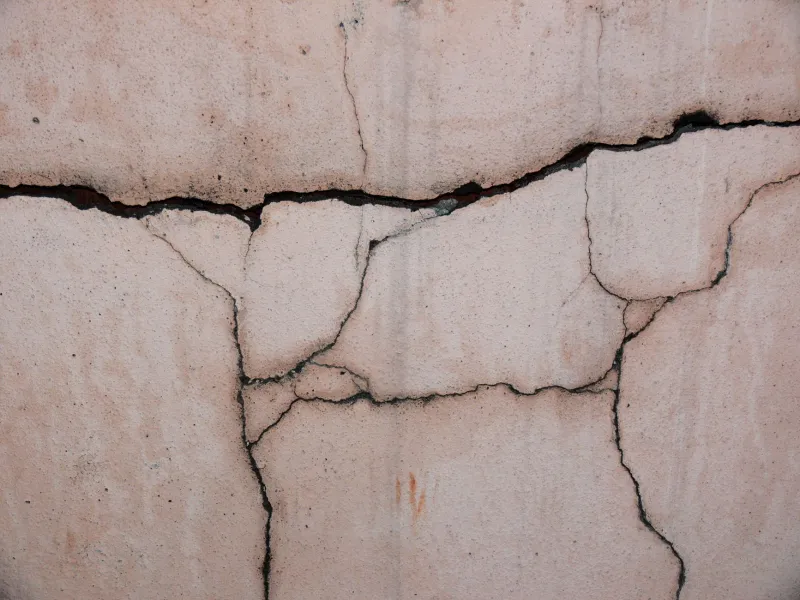
Without intervention, a crack that was once hairline-thin will frequently widen as seasonal soil movement continues to stress the surrounding concrete. By the second or third year, a crack may measure 1/4 inch or more, display visible displacement between its edges, or begin admitting measurable water during rain events.
At this point, the structural implications shift. A widened crack with lateral displacement suggests that the foundation sections on either side of the fracture are moving independently — a sign of differential settlement in the underlying soil. Water intrusion compounds the problem by further saturating and destabilizing the bearing soil, accelerating the settlement cycle.
Repair at this stage requires more comprehensive intervention. Crack repair must be paired with soil stabilization to address the root cause of movement. Interior drainage systems may be necessary to manage water intrusion. The cost curve begins to steepen considerably.
Property value impact: Disclosure laws in most U.S. states require sellers to report known foundation issues. A documented widening crack can reduce a home's appraised value by $10,000–$30,000, depending on the market and severity.
Stage Three: Structural Manifestation (Year 4–7)
Estimated repair cost at this stage: $10,000–$35,000
By mid-decade, unaddressed foundation movement begins to manifest throughout the structure. Doors and windows in the affected zone become difficult to operate. Drywall cracks appear along seams and corners. Floors develop noticeable slopes. In homes with basements, wall bowing may become visible — a serious indicator that lateral soil pressure is exceeding the wall's design capacity.
Each of these symptoms reflects the redistribution of structural loads across a foundation that is no longer providing uniform support. As one section of the foundation settles or shifts, adjacent structural members compensate, creating stress concentrations in beams, joists, and load-bearing walls.
Repair at this stage typically involves:
- Underpinning with helical or push piers to transfer foundation loads to stable bearing strata below the zone of soil instability
- Wall anchors or carbon fiber straps to arrest and reverse bowing basement walls
- Comprehensive drainage remediation to eliminate ongoing water contribution to soil destabilization
- Interior finishing repairs to address cosmetic damage caused by structural movement
The cost of this multi-component intervention frequently exceeds $20,000 for moderate cases and can approach $35,000 or more for extensive damage.
Stage Four: Advanced Structural Compromise (Year 7–10)
Estimated repair cost at this stage: $40,000–$100,000+
In cases where foundation movement has been ignored for the better part of a decade, the structural system of the home may be significantly compromised. Severe differential settlement can cause permanent distortion of the framing, requiring not only foundation repair but also structural remediation of the above-grade elements — sistered joists, replaced beams, releveled subfloors, and in extreme cases, partial demolition and reconstruction of affected sections.
At this stage, the scope of work frequently requires coordination between foundation specialists, structural engineers, and general contractors. Permitting requirements become more complex. Project timelines extend from days to weeks or months. And the financial exposure reaches a magnitude that many homeowners — and their mortgage lenders — find genuinely alarming.
Property value impact at this stage: Advanced foundation compromise can render a property difficult or impossible to finance through conventional mortgage products. Buyers may require significant price concessions, or the property may attract only cash investors seeking distressed assets at steep discounts.
The Aggregate Financial Case
To distill this into concrete terms: a homeowner who addresses a hairline crack in year one at a cost of $1,500 may spend a total of $3,000–$5,000 over a decade on maintenance and monitoring. A homeowner who defers action until year seven or eight may face a remediation bill of $50,000 or more — plus property value depreciation that can exceed $75,000 in competitive markets.
The difference between these two outcomes is not luck or circumstance. It is the decision, made early, to treat a small indicator as worthy of professional attention.
What Willow Branch Stabilization Recommends
- Conduct annual foundation inspections, particularly in spring following freeze-thaw cycles and after significant drought periods.
- Document all observed cracks with photographs, measurements, and dates. Note any changes in width, length, or displacement between inspection cycles.
- Do not rely on surface-level repairs — caulk and hydraulic cement address symptoms, not causes. If soil movement is driving crack formation, it will continue regardless of surface treatment.
- Request a professional assessment for any crack wider than 1/8 inch, any crack accompanied by water intrusion, or any crack that has measurably changed since it was first observed.
- Understand your disclosure obligations. Addressing foundation issues proactively protects your equity and your legal standing when the time comes to sell.
The ground beneath your home does not forget neglect. But with timely professional guidance, the compounding consequences of foundation damage are entirely preventable. The numbers make a compelling case. The decision is yours to make.