What Insurance Adjusters Are Counting Before You Even Know They've Arrived: A Property Owner's Pre-Claim Foundation Audit

There is a particular disadvantage built into the standard insurance claim process that most property owners never fully recognize until it is too late. When a loss event occurs — whether a severe storm, a prolonged drought, or a sudden soil shift — the adjuster who arrives at your property brings a practiced eye shaped by professional training and institutional criteria. They are not simply walking your perimeter and writing down observations. They are comparing what they see against a structured framework designed to distinguish pre-existing conditions from covered damage.
If you have not already documented the baseline condition of your foundation and surrounding soil environment, that distinction becomes extraordinarily difficult to defend in your favor.
At Willow Branch Stabilization, we work alongside property owners at every stage of the structural care process — and one of the most consistent observations we make is that people who understand how adjusters evaluate foundations are far better positioned to protect their claims. What follows is a practical breakdown of the markers professionals assess, paired with guidance on how to build your own pre-loss record.
The Adjuster's Primary Objective: Causation, Not Condition
Before examining specific checklist items, it is worth understanding the adjuster's fundamental goal. Their task is not to determine whether your foundation is damaged — it is to determine when and why it became damaged, and whether that cause falls within the scope of your policy.
This distinction matters enormously. A hairline crack that predates your policy by five years tells a very different story than a crack that appeared in the wake of a covered peril. The challenge is that concrete and masonry do not carry timestamps. Without prior documentation, the adjuster defaults to what the evidence suggests — and evidence can be interpreted in multiple directions.
Property owners who arrive at a claim with dated photographs, prior inspection reports, and professional assessments hold a measurably stronger position than those who cannot establish a pre-event baseline.
Structural Markers Adjusters Examine at the Foundation Level
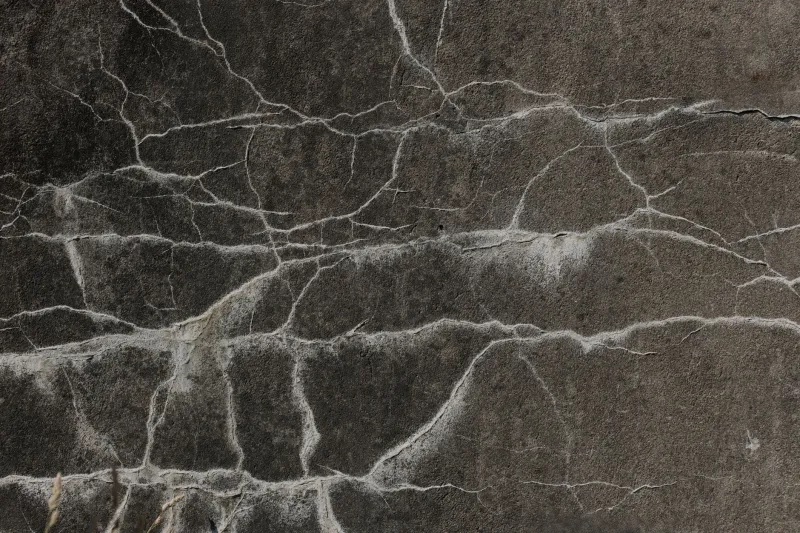
Crack morphology and pattern distribution. Not all foundation cracks are equal in an adjuster's assessment. Vertical cracks, horizontal cracks, diagonal cracks, and stair-step fractures in masonry each carry different structural implications — and different causation profiles. Adjusters are trained to read crack geometry as evidence of specific stress types. Horizontal cracks in basement walls, for instance, suggest lateral soil pressure, while diagonal cracks near corners may indicate differential settlement. Documenting the exact location, orientation, width, and length of any existing cracks before a loss event is among the most important steps a property owner can take.
Displacement and elevation variance. Adjusters often use measurement tools to identify whether floor systems, slab sections, or foundation walls have shifted from their original plane. Uneven floors, gaps between wall framing and foundation plates, and doors or windows that no longer operate correctly are all cataloged. If these conditions existed before a covered event, they may be excluded — but only if the adjuster can establish a prior timeline. Your own dated documentation can counter that assumption.
Evidence of prior repair. Patched cracks, previously injected voids, and historic waterproofing installations are noted by adjusters as indicators of pre-existing conditions. This is not inherently negative — a well-documented repair history can actually demonstrate responsible maintenance. The problem arises when prior repairs are present but unexplained, leaving the adjuster to draw their own conclusions about the severity of the original damage.
Environmental and Soil Indicators That Influence Claim Outcomes
Drainage patterns and water intrusion evidence. Adjusters examine the grading around a structure, the condition of gutters and downspout extensions, and any visible signs that water has been pooling near the foundation. Efflorescence — the white mineral residue left behind when water moves through concrete — is a particularly common marker. It signals recurring moisture infiltration and can prompt questions about whether reported damage is the result of a single event or a long-term pattern.
Soil condition and vegetation proximity. The soil immediately surrounding your foundation communicates a great deal about structural risk. Expansive clay soils that shrink and swell with moisture changes, root systems from mature trees exerting pressure against foundation walls, and areas of visibly disturbed or eroded soil near the structure are all factors adjusters incorporate into their causation analysis.
Evidence of subsidence or heave. Settled walkways, separated porch attachments, and uneven exterior grades adjacent to the foundation can indicate that the soil beneath the structure has shifted. These conditions may predate a covered event or result directly from it — and the documentation trail you establish beforehand determines which interpretation is easier to support.
Building Your Own Pre-Claim Baseline: A Practical Approach
You do not need specialized equipment to begin building a meaningful pre-loss record. What you need is consistency, detail, and a reliable method of establishing dates.
Dated photography with measurement references. Photograph every visible crack, stain, gap, or area of concern on both the interior and exterior of your foundation. Place a ruler or tape measure beside each crack to capture width. Use your smartphone's built-in timestamp feature and back up images to a cloud service to establish an unambiguous record date.
A professional baseline inspection report. A written assessment from a licensed structural engineer or foundation specialist carries far more evidentiary weight than photographs alone. This document establishes current conditions in technical language, notes the likely age and cause of any existing issues, and creates a professional record that adjusters are accustomed to evaluating. Scheduling this inspection before any damage occurs — rather than after — is the critical distinction.
Annual review and update cycles. Foundations and surrounding soils change incrementally over time. A baseline established five years ago may not accurately reflect current conditions. Establishing an annual or biennial review cycle ensures your documentation remains current and reduces the risk that new conditions are mischaracterized as pre-existing.
Policy cross-reference. Review your homeowner's or commercial property policy with specific attention to foundation-related exclusions. Many policies exclude damage caused by settling, shrinkage, earth movement, or hydrostatic pressure — categories that can be interpreted broadly by carriers. Understanding where your coverage ends allows you to identify gaps that might warrant supplemental coverage or additional protective measures.
The Advantage of Acting Before the Event
Insurance claims are, at their core, evidentiary processes. The property owner who arrives at that process with organized, professional, and dated documentation of their foundation's prior condition is not simply better prepared — they are operating from a position of structural credibility that the claims process rewards.
The adjusters who evaluate your property are skilled professionals doing a necessary job. They are not adversaries, but they do operate within institutional frameworks designed to establish whether a claim is valid and to what extent. Your documentation is the counterpart to their checklist — and without it, the evaluation proceeds entirely on their terms.
At Willow Branch Stabilization, we provide baseline foundation assessments specifically designed to support long-term documentation strategies. Whether you are preparing for a future claim, planning a property transaction, or simply establishing responsible stewardship of a significant asset, understanding the professional evaluation process is the first step toward protecting what your property is built upon.