Closing Table Confidence: What Mortgage Lenders Actually Examine in a Foundation Before Approving Your Loan

The negotiation is complete. The purchase agreement is signed. The closing date is circled on the calendar. Yet for thousands of American homebuyers and sellers each year, that date quietly disappears — replaced by frantic phone calls, renegotiated terms, or a transaction that dissolves entirely. The culprit, more often than many real estate professionals care to admit, is what lies beneath the structure itself.
Mortgage lenders and appraisers operate under a set of structural expectations that rarely appear in listing brochures or seller disclosures. These are not arbitrary preferences. They reflect the financial institution's need to protect its collateral — the property itself. When the ground beneath that collateral is compromised, the lender's confidence in the investment erodes just as surely as the soil supporting the structure.
Understanding what banks and underwriters actually look for during the lending process is not insider knowledge reserved for real estate attorneys. It is practical information that any prepared seller, buyer, or property investor should have well before a transaction reaches the final stage.
Why Lenders Care About What Appraisers Cannot Always See
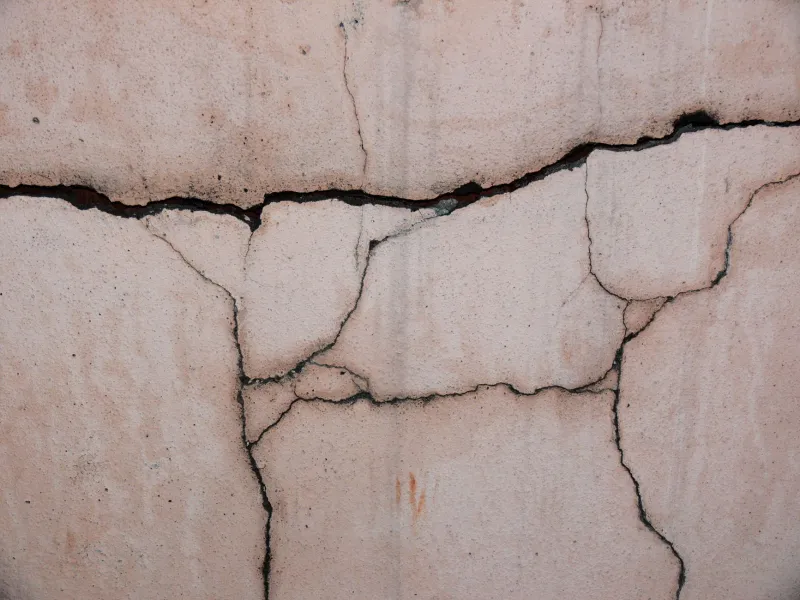
A standard home appraisal is not a structural engineering inspection. The appraiser's role is primarily to establish market value, and while they are trained to note visible deficiencies, their mandate does not extend to subsurface diagnostics. However, certain visual indicators — diagonal cracks radiating from door and window corners, floors with measurable slope, gaps between walls and ceilings, doors that bind without explanation — trigger a requirement for further review before a loan can proceed.
When those indicators appear, lenders operating under conventional guidelines (including those backed by Fannie Mae and Freddie Mac) are required to obtain a structural engineer's report before the appraisal can be completed with confidence. FHA and VA loans carry their own specific requirements, often even more stringent, given the government's interest in ensuring the long-term habitability of properties financed under those programs.
The essential point is this: by the time a lender requests a structural inspection, the transaction is already under stress. Delays accumulate. Rate locks expire. Buyers grow anxious. Sellers face uncomfortable conversations about price reductions or repair concessions they had not anticipated.
The Specific Issues That Trigger Lender Concern
Not every crack in a foundation wall represents a threat to a loan approval. Lenders and their appraisers are looking for patterns and conditions that suggest active movement, compromised load-bearing capacity, or drainage failures likely to worsen over time. The following categories consistently appear in underwriting reviews and structural addenda.
Active versus settled cracks. Hairline cracks that have remained stable for years may be noted but rarely derail a transaction. Cracks that show stair-step patterns in brick or block, horizontal displacement in basement walls, or evidence of recent widening raise immediate concern. Lenders want assurance that the structure is not in the middle of an ongoing movement event.
Foundation settlement and differential movement. When one portion of a foundation has dropped relative to another, the structural integrity of the entire building can be affected. Appraisers look for sloping floors, misaligned door frames, and separating trim — all indicators of differential settlement that lenders treat as red flags requiring professional evaluation.
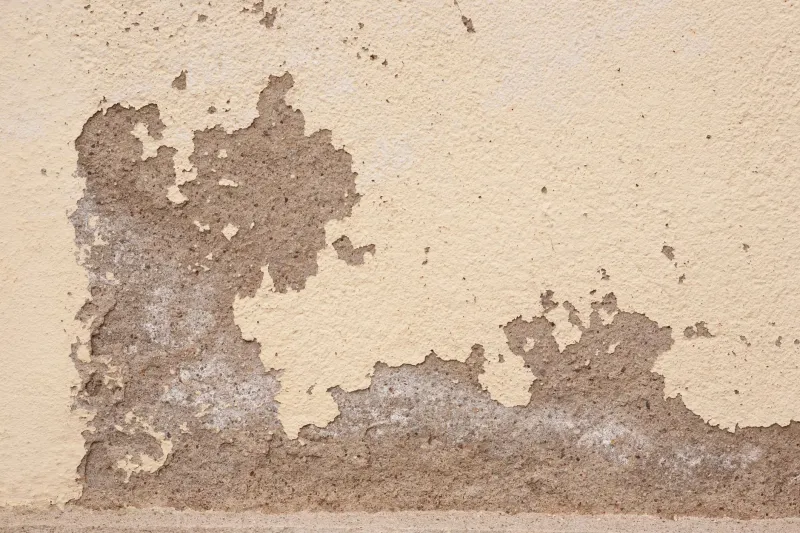
Water intrusion and drainage compromise. Evidence of chronic moisture in crawl spaces, basements, or around the perimeter of a slab foundation signals to underwriters that the soil supporting the structure may be subject to repeated saturation and erosion. FHA guidelines, in particular, are explicit about unresolved water intrusion as a condition that must be remediated before loan approval.
Soil instability near the foundation perimeter. Visible erosion, voids adjacent to foundation walls, or areas where the grade has settled away from the structure indicate that the soil is not performing its stabilizing function. In expansive clay regions common across Texas, Oklahoma, and parts of the Southeast and Midwest, lenders in high-risk markets may request soil reports as a matter of course.
Pier and beam system deterioration. For older homes constructed on pier and beam foundations — common in pre-1970s housing stock across much of the South and parts of the West — lenders look for evidence of deteriorated wood members, failed or displaced piers, and inadequate ventilation in crawl spaces. These systems require specialized evaluation that a standard appraisal cannot provide.
What Sellers Can Do Before Listing
The most effective strategy for navigating lender scrutiny is also the most straightforward: address potential concerns before they become deal-threatening discoveries. A pre-listing foundation assessment conducted by a qualified structural engineer or foundation specialist accomplishes several objectives simultaneously.
First, it eliminates surprise. A seller who already possesses a professional report documenting the condition of their foundation — and any remediation that has been completed — enters negotiations with credibility. They can respond to buyer concerns with documentation rather than defensiveness.
Second, it provides price certainty. Sellers who discover foundation issues mid-transaction are almost always negotiating from a weakened position. The buyer's leverage is at its peak when problems surface during the inspection period. A seller who has already obtained repair estimates, or better yet, completed the work, retains far greater control over the final terms.
Third, it accelerates the lending process. When a lender's appraiser notes a potential concern and the seller can immediately provide a current structural engineer's report, the timeline for obtaining additional documentation collapses from weeks to days. In competitive markets where buyers are managing rate lock expirations, that efficiency has measurable financial value.
The Buyer's Perspective: Due Diligence That Protects More Than the Closing
For buyers, understanding the lending threshold is equally valuable — not merely as a transactional concern, but as a framework for evaluating long-term risk. A property that clears the minimum standard for loan approval may still carry soil or structural conditions that will require attention in the years ahead.
Buyers who commission an independent foundation assessment prior to finalizing their offer are in a position to negotiate informed concessions, request professional remediation as a closing condition, or — when the findings are genuinely serious — walk away from a purchase that would have represented a significant financial liability.
The closing table is not the appropriate place to discover that the ground beneath a property has been moving. That discovery belongs in the due diligence phase, where it can be evaluated calmly, addressed professionally, and resolved in a manner that protects every party to the transaction.
Solid Ground Begins Before the Sale
At Willow Branch Stabilization, we work with homeowners, buyers, real estate professionals, and commercial property investors who understand that structural integrity is not simply a matter of passing inspection. It is the foundation — in the most literal sense — of a sound real estate investment.
A property that stands on stable, well-supported ground does not merely satisfy a lender's requirements. It holds its value through market cycles, resists the cumulative damage that moisture and soil movement inflict over decades, and provides the kind of confidence that no amount of cosmetic renovation can replicate.
If you are preparing to sell, purchase, or refinance a property and have questions about what a foundation assessment should include, we invite you to contact our team. The conversation that happens before the closing is almost always less expensive — and considerably less stressful — than the one that happens during it.