Uncovered Ground: What Your Homeowner's Policy Actually Says About Foundation Damage

The Assumption That Costs Homeowners Thousands
There is a common and costly misconception embedded in the way most Americans think about homeowner's insurance. The policy, they believe, is a comprehensive safety net — something that catches catastrophic losses before they become personal financial disasters. For many perils, that belief holds. For foundation damage, it almost never does.
The reality is that standard homeowner's insurance policies, including those issued under the widely used HO-3 form, are built around a named-perils or open-perils framework that almost universally excludes earth movement, soil settlement, and gradual structural deterioration. The language is often buried deep in the exclusions section, written in dense policy terminology, and rarely explained at the point of sale. By the time a homeowner discovers it, the foundation has already begun to fail.
Understanding why this gap exists — and what legitimate options do exist — is not merely an academic exercise. It is a financial imperative for every property owner in the United States.
Why Standard Policies Exclude Foundation Damage
Insurance operates on the principle of insurable risk: events that are sudden, accidental, and not reasonably foreseeable. Foundation problems rarely meet that definition. Soil settlement is a gradual process, often unfolding over years or decades. Expansive clay soils shift with moisture cycles season after season. Tree root intrusion advances incrementally. Hydrostatic pressure builds slowly against basement walls. From an actuarial standpoint, these are maintenance issues — foreseeable consequences of owning property on imperfect ground — rather than insurable accidents.
Most policies explicitly exclude damage caused by:
- Earth movement, including settling, shrinking, expanding, or shifting soil
- Water damage from below grade, such as hydrostatic pressure or groundwater intrusion
- Gradual deterioration, which encompasses slow structural decline over time
- Poor construction or design defects, which may have contributed to original instability
These exclusions are not loopholes inserted by negligent insurers. They reflect the fundamental logic of how insurance products are priced and structured. The challenge for property owners is that these exclusions are also extraordinarily broad, capturing the majority of real-world foundation failure scenarios.
The Narrow Window Where Coverage May Apply
Not every foundation-related loss is automatically excluded. There are specific, narrow circumstances under which a standard homeowner's policy may provide some measure of coverage, and property owners should understand them carefully.
Sudden and accidental events are the most viable pathway to coverage. If a water pipe within the structure bursts and the resulting flood undermines the foundation, the damage may be covered under the policy's water damage provisions — provided the cause was sudden and not the result of deferred maintenance. Similarly, if a vehicle collision or falling object causes direct structural damage, coverage may apply.
Fire-related structural compromise is another area where coverage typically holds. If a fire weakens load-bearing elements and the resulting structural instability affects the foundation, the loss generally falls within the policy's fire coverage.
Sinkhole coverage represents a distinct category. In states such as Florida, Tennessee, and parts of the Midwest where sinkhole activity is geologically documented, some insurers offer sinkhole or catastrophic ground cover collapse endorsements. These are not standard features — they must be requested and purchased separately — but they do exist and provide meaningful protection in high-risk areas.
What these examples share is an identifiable, discrete triggering event. The moment a claim enters the territory of gradual soil movement or long-term settlement, the exclusions almost certainly apply.
How Soil Stabilization Claims Differ From Structural Repair Claims
One of the more nuanced distinctions in this space involves how insurers categorize soil stabilization work versus structural repair. This matters because the framing of a claim can influence whether it receives any consideration at all.
Soil stabilization — the process of chemically treating, mechanically improving, or physically reinforcing the ground beneath and around a structure — is almost never covered under a standard homeowner's policy. It is classified as a preventive or corrective improvement to the land itself, not a repair to the insured dwelling.
Structural repairs to the home — repairing cracked foundation walls, replacing damaged sill plates, or correcting bowing basement walls — occupy a slightly different position. These are repairs to the insured structure, and if the proximate cause of damage falls within a covered peril, there is at least a basis for submitting a claim. The insurer will still investigate the underlying cause, and if soil movement is identified as the root trigger, the exclusion will likely be applied regardless of how the repair itself is categorized.
This distinction underscores why documentation and professional assessment matter so significantly. A licensed structural engineer's report that carefully identifies the proximate cause of damage — rather than simply noting the visible symptoms — can be the difference between a claim that receives consideration and one that is immediately denied.
What Actually Provides Financial Protection
Given the limitations of standard homeowner's policies, property owners have several avenues worth pursuing.
Specialty endorsements and riders are the most direct solution. Some insurers offer add-on coverage for earth movement or foundation issues, though these products are not universally available and may carry significant premium increases. Asking your insurer directly whether such an endorsement exists is a worthwhile conversation to have before a problem emerges.
Flood insurance through the National Flood Insurance Program (NFIP) provides some protection for foundation damage caused by surface flooding, storm surge, or overflow from bodies of water. This is not a substitute for comprehensive foundation coverage, but for properties in flood-prone areas, it addresses one significant risk vector.
Home warranty products sometimes include structural components, though coverage terms vary enormously and pre-existing conditions are routinely excluded. Reading the fine print on any warranty product is essential before treating it as reliable financial protection.
Proactive soil stabilization and foundation maintenance represent the most reliable form of financial protection available to most homeowners. Addressing drainage deficiencies, managing soil moisture around the structure, and investing in professional assessments before problems escalate dramatically reduces the likelihood of incurring the kind of catastrophic repair bills that insurance would ideally cover.
The Conversation to Have Before You Need It
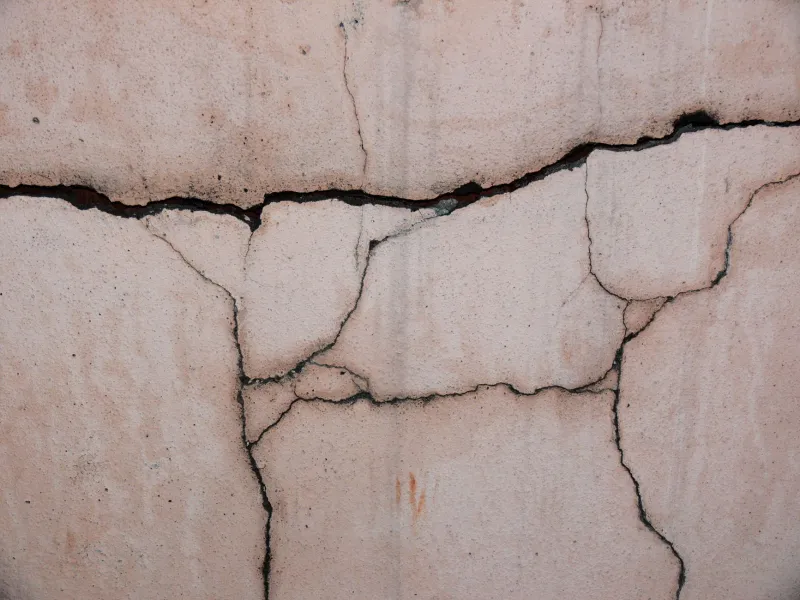
The time to understand your coverage is not when cracks appear in your foundation walls or when doors begin to stick and floors begin to slope. By that point, the damage is already occurring, and the policy exclusions are already in effect.
Contact your insurance agent and request a plain-language explanation of what your current policy covers and excludes with respect to foundation and soil-related damage. Ask specifically about available endorsements. If you live in a geologically active area — expansive clay soils, karst topography, high groundwater zones — ask whether specialty coverage products are available in your market.
And invest in a professional foundation assessment from a qualified structural engineer. The cost of that assessment is modest compared to the financial exposure of discovering, mid-crisis, that your insurance policy offers no relief whatsoever.
Solid ground is not simply a metaphor at Willow Branch Stabilization. It is the literal foundation of financial security for every property owner. Knowing where your insurance ends — and where your own preparedness must begin — is the first step toward protecting both.