Inspected and Missed: The Critical Foundation Failures That Standard Home Inspections Were Never Designed to Catch
The Document That Feels Like Protection
The home inspection report has become a ritual artifact of the American real estate transaction. Buyers receive it, flip through the photographs, note the flagged items, negotiate a credit or two, and proceed to closing with a sense that the property has been evaluated by a professional. The inspection passed. The house checked out. The foundation is fine.
This confidence is understandable. It is also, in many cases, unfounded—and the consequences of that misunderstanding can be financially catastrophic.
Standard home inspections in the United States are governed by the Standards of Practice published by organizations such as the American Society of Home Inspectors (ASHI) and the International Association of Certified Home Inspectors (InterNACHI). These standards define what inspectors are required to examine and, critically, what falls outside the scope of their assessment. The gap between what buyers believe an inspection covers and what it actually evaluates is particularly acute when it comes to foundation and soil conditions.
What the Standards of Practice Actually Require
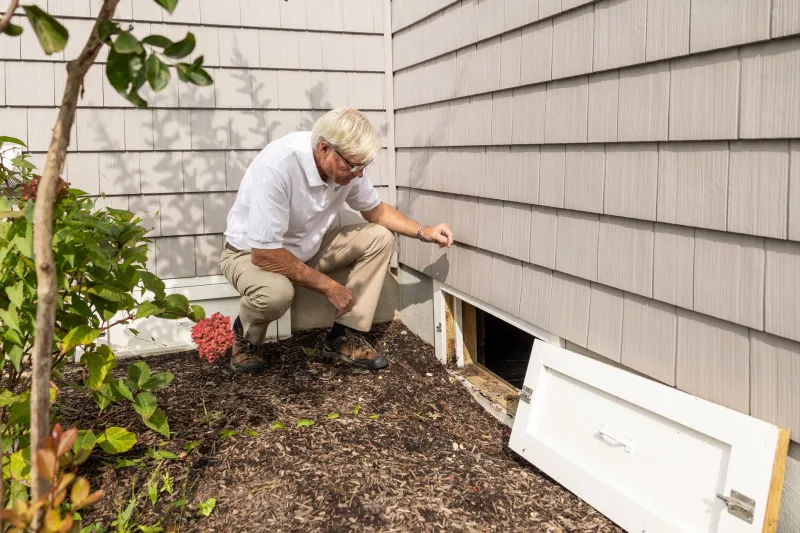
A licensed home inspector is generally required to visually examine accessible structural components—foundation walls where visible, floor framing where accessible from a crawl space or basement, and visible evidence of settlement such as significant floor slopes or pronounced wall cracks. The operative word throughout is visual. Inspectors are not required to probe, test, excavate, or perform any analysis that extends beyond what can be observed with the naked eye and basic tools during a two-to-three-hour walkthrough.
This means that a standard inspection cannot and does not assess soil bearing capacity, subsurface moisture conditions, the degree of differential settlement, the integrity of below-grade waterproofing systems, the condition of pier footings in a crawl space, or the presence of expansive clay formations beneath a slab. These are precisely the conditions that drive the most expensive and disruptive foundation failures.
An inspector who observes a hairline crack in a basement wall and notes it as "minor cracking, monitor for changes" is operating entirely within the standards of their profession. That notation, however, provides no information about whether the crack reflects normal concrete curing, the early stage of lateral wall movement, or the surface expression of a subsurface drainage failure that has been compromising the soil for years. Distinguishing among these possibilities requires tools, training, and liability that a standard home inspection simply does not encompass.
The Liability Gap That Buyers Rarely Understand
Home inspectors carry errors and omissions insurance, and buyers frequently assume that this coverage would protect them if a significant foundation issue goes undetected. In practice, the liability protections available to buyers through the inspection process are substantially narrower than most assume.
Inspectors are held to the standard of what a reasonably competent inspector could have detected through visual examination. If a foundation problem was not visible—because it was concealed beneath finished basement walls, obscured by stored belongings, or located in an area the inspector documented as inaccessible—the inspector typically bears no liability for failing to identify it. Moreover, many inspection contracts include arbitration clauses, limitation of liability provisions capping damages at the cost of the inspection itself, and short claim windows that further constrain a buyer's options.
The practical result is that a buyer who closes on a property with an inspection report in hand and subsequently discovers a $75,000 foundation stabilization need frequently has no meaningful recourse against the inspector, particularly if the failure mode was subsurface in nature. The report looked authoritative. The liability was always minimal.
What Structural Engineers Evaluate That Inspectors Do Not
A licensed structural engineer performing a foundation-specific assessment operates under an entirely different framework of expertise, methodology, and professional obligation.
Where an inspector observes and describes, a structural engineer analyzes and interprets. An engineer examining foundation cracks considers their geometry, orientation, width, and depth to diagnose probable causes and project likely progression. Diagonal cracks originating at window and door corners, stair-step cracking in brick veneer, and horizontal cracking in basement walls each carry distinct diagnostic significance that a visual description alone cannot capture.
Structural engineers can recommend, coordinate, and interpret geotechnical investigations—soil borings, laboratory analysis, and bearing capacity assessments—that provide the subsurface data necessary to understand what is actually driving any observed movement. They can evaluate the adequacy of the existing foundation system relative to the soil conditions present, identify whether previous repairs were performed correctly, and provide a professional opinion with the legal weight of an engineering stamp.
For buyers of properties where any foundation concern exists—and often for buyers of properties where no concern is immediately visible—a structural engineering assessment prior to closing is not a redundant expense layered on top of the home inspection. It is a fundamentally different service answering fundamentally different questions.
What Buyers Should Demand Before Closing
The standard home inspection contingency that most purchase contracts include is a reasonable baseline protection, but it should not be treated as sufficient for properties where foundation risk is a realistic concern. Several categories of property warrant buyer-initiated structural engineering review as a condition of closing.
Homes built on expansive clay soils—prevalent across Texas, Oklahoma, Colorado, and portions of the Southeast—face inherent shrink-swell risk that escalates with age and deferred drainage management. Pier-and-beam construction, common in homes built before the widespread adoption of slab foundations, requires crawl space evaluation that goes beyond what most inspectors perform. Properties in areas with documented subsidence, former industrial or agricultural use, or significant historical grading activity all carry subsurface risk profiles that visual inspection cannot adequately characterize.
Buyers who identify any visual indicator of potential foundation movement—sticking doors, diagonal cracks above openings, visible floor slope, gaps between walls and ceilings—should treat these observations not as negotiating points but as diagnostic prompts requiring professional engineering evaluation before a purchase decision is finalized.
The Inspection Report Is a Starting Point, Not a Conclusion
None of this is an argument against home inspections. They serve a legitimate and valuable function in the real estate transaction, identifying a broad range of visible deficiencies across mechanical, electrical, plumbing, and structural systems. The problem is not what inspections do—it is what buyers believe they do.
A standard inspection report is a visual survey conducted under significant time and access constraints, prepared by a professional whose training and liability are calibrated accordingly. It is a starting point for due diligence, not its conclusion. When the subject of that diligence is the ground beneath a structure—the foundation upon which every other system depends—the starting point should lead somewhere deeper.
Solid ground is not assumed. It is verified. And verification, in matters of structural consequence, requires the expertise of professionals whose entire professional framework is built around finding what others miss.