Equity at Risk: How Unresolved Foundation Issues Quietly Drain Commercial Property Value
In commercial real estate, value is rarely lost in a single dramatic event. More often, it disappears incrementally—through deferred maintenance, overlooked inspections, and the slow accumulation of structural risk that no one formally documents until a transaction forces the issue. Foundation and soil stability problems occupy a particularly costly position in this dynamic. They are difficult to see, easy to defer, and disproportionately damaging when they finally surface during an appraisal, a refinancing review, or a prospective sale.
Understanding how foundation deficiencies translate into measurable financial loss is not merely an academic exercise. For commercial property owners and real estate investors across the United States, it is a prerequisite for sound asset management.
The Appraisal Mechanism: How Structural Risk Becomes a Dollar Figure
Commercial property appraisals are governed by a combination of income capitalization, comparable sales analysis, and cost approaches. Each of these methods is sensitive, in different ways, to evidence of foundation compromise.
Under the income approach, appraisers assess a property's ability to generate stable, reliable cash flow. A building with documented foundation movement introduces uncertainty into that calculation. Tenants may vacate, lease renewals may falter, and lenders may impose reserve requirements that reduce effective net operating income. When NOI declines—or when an appraiser applies a higher capitalization rate to account for perceived risk—the resulting valuation can drop substantially. A 50-basis-point increase in cap rate applied to a property generating $500,000 in annual NOI can reduce appraised value by $1 million or more, depending on the market.
Under the cost approach, appraisers estimate the expense of correcting identified deficiencies. If a Phase I environmental report or a structural engineering inspection flags active soil settlement or compromised footings, that remediation cost is typically deducted from the assessed replacement value. In markets where construction costs remain elevated, those deductions can be severe.
Comparable sales analysis introduces a third vulnerability. Once a property's foundation history becomes part of the public record—through permit filings, inspection reports, or disclosed litigation—it can influence how future comparable sales are weighted, creating a persistent discount that follows the asset through successive ownership cycles.
Insurance Premiums and the Compounding Cost of Deferred Action
The relationship between structural instability and insurance costs is less frequently discussed but equally consequential. Commercial property insurers in the United States increasingly rely on third-party risk assessments and engineering reports when underwriting policies for older or distressed assets. A property with a history of foundation movement, expansive soil conditions, or documented differential settlement may face:
- Higher annual premiums reflecting elevated structural risk
- Exclusions or sublimits applied specifically to earth movement or subsidence-related claims
- Requirements for engineering certification before coverage is bound or renewed
- Difficulty obtaining coverage from preferred carriers, forcing placement in surplus lines markets at significantly higher cost
Consider a mid-sized retail strip center in the Mid-South, where expansive clay soils are common and seasonal moisture fluctuations are pronounced. If that property carries unaddressed foundation cracking and has not been evaluated by a licensed geotechnical engineer, its insurer may apply a subsidence exclusion. Should a tenant subsequently suffer business interruption losses tied to building movement, the owner could face uncovered liability exposure—an outcome far more expensive than the stabilization work that might have prevented it.
Financing Friction: When Lenders Pull Back
Commercial mortgage lenders, whether conventional banks or CMBS conduit originators, conduct their own due diligence on structural condition. A property engineer's report (PCA/PCR) is standard in most commercial loan transactions above a certain threshold. When that report identifies material foundation concerns, lenders have several tools at their disposal—none of them favorable to the borrower.
Lenders may require an immediate repair escrow, withholding a portion of loan proceeds until documented remediation is complete. They may reduce loan-to-value ratios, requiring the borrower to bring additional equity to close. In more serious cases, they may decline to fund the transaction entirely, leaving a deal in collapse and the seller holding an asset with a documented structural liability.
For owners seeking to refinance existing debt, the consequences can be equally disruptive. A property that appraised cleanly five years ago may return a lower value today if a new inspection reveals progressive settlement that went unaddressed. Reduced appraised value means reduced loan proceeds, which can create a funding gap that forces the owner to contribute cash at refinancing—an unanticipated capital call that strains liquidity.
Case Illustration: The Cost of Waiting
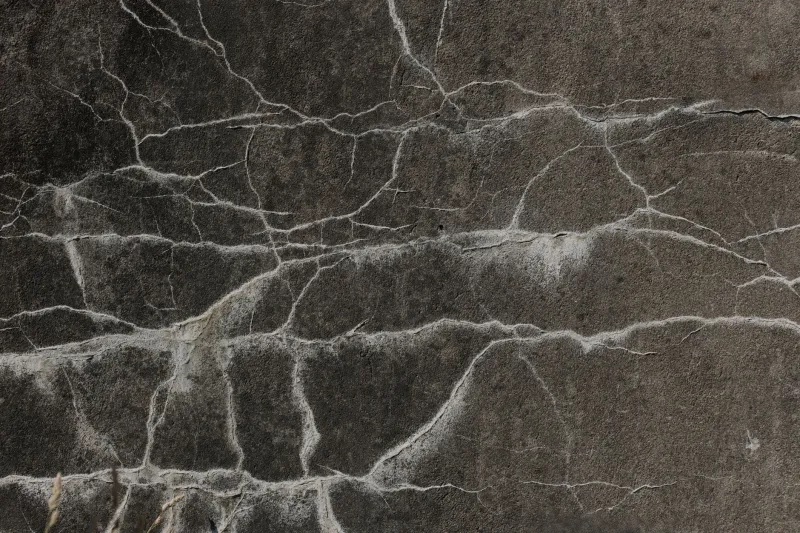
Consider the following scenario, drawn from patterns commonly encountered in commercial stabilization work across the southeastern United States. A light industrial property owner notices minor floor slab cracking near the loading dock area. The cracks are hairline-width and cause no immediate operational disruption. The owner defers investigation, reasoning that the building remains functional.
Three years later, the owner lists the property for sale. A buyer's engineering inspection reveals that the cracking reflects differential settlement in the underlying fill material—a correctable condition, but one requiring pier installation and slab lifting across approximately 4,000 square feet. The estimated remediation cost is $180,000. The buyer's lender requires a repair escrow equal to 125% of that estimate, or $225,000, held back from sale proceeds. The buyer also requests a price reduction of $320,000, citing the documented structural history and the uncertainty surrounding long-term soil behavior. The seller, who might have addressed the issue proactively for $90,000 to $110,000 earlier in the property's history, ultimately absorbs a combined financial impact exceeding $400,000.
The arithmetic is straightforward. Early intervention preserves equity. Deferred action compounds loss.
Stabilization as Asset Strategy, Not Overhead
The framing that separates sophisticated commercial property owners from reactive ones is simple: foundation stabilization is not a maintenance expense. It is an equity preservation investment with a calculable return.
When a property undergoes documented geotechnical evaluation, followed by engineered soil stabilization or structural underpinning where warranted, several things happen simultaneously. The asset's risk profile improves in the eyes of appraisers, lenders, and insurers. The owner gains defensible documentation that supports higher valuations and smoother financing. Prospective buyers encounter a clean structural history rather than a liability disclosure. And the compounding deterioration that turns a manageable problem into a transaction-killing one is interrupted before it reaches that threshold.
At Willow Branch Stabilization, we work with commercial property owners and their advisors to assess soil and foundation conditions with the rigor that institutional-grade assets demand. Our approach treats structural integrity as a financial variable—one that, when properly managed, contributes directly to the long-term value and marketability of the properties we serve.
The ground beneath a commercial building is not a passive element. It is an active participant in the asset's financial story. Owners who recognize that relationship early consistently fare better than those who discover it under duress.
Solid ground is not incidental to property value. It is foundational to it.