When Foundation Repairs Open a Door to Radon: What Homeowners Discover Beneath the Surface
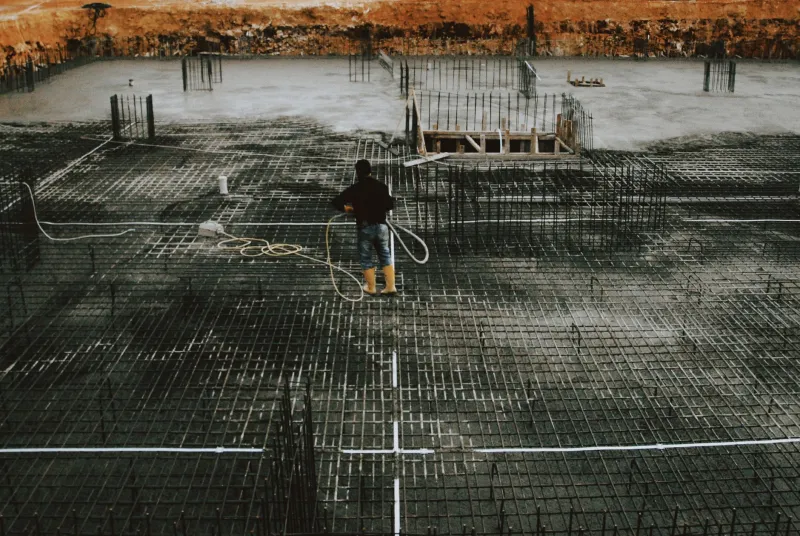
A Repair Project That Revealed More Than Expected
For most homeowners, scheduling a foundation inspection feels like a straightforward step toward protecting their property. Cracks are identified, soil conditions are evaluated, and a remediation plan is developed. What few anticipate is that the work itself — the excavation, the drilling, the exposure of previously sealed subsurface material — can reveal a secondary hazard that no structural engineer originally came to address.
Radon intrusion is one of the most commonly overlooked consequences of foundation disturbance. It is colorless, odorless, and undetectable without specialized equipment. And in a significant number of cases across the United States, it is found at elevated concentrations precisely in the areas where foundation repair contractors are already working.
Understanding why these two concerns so frequently intersect is essential for any homeowner who is either planning structural repairs or living in a home with an aging foundation.
What Radon Has to Do With Your Foundation
Radon is a naturally occurring radioactive gas produced by the decay of uranium in soil and rock. It moves upward through the ground and enters structures through the same pathways that allow moisture, gases, and soil movement to affect a building's foundation: cracks in concrete slabs, gaps around utility penetrations, deteriorated mortar joints, and porous block foundations.
The connection to foundation integrity is not incidental. It is structural. Every crack that allows water infiltration is also a potential radon entry point. Every void created by soil settlement — the same voids that cause slab displacement and pier movement — creates low-pressure zones that draw radon upward more efficiently. When a foundation is compromised, its ability to act as a barrier between your living space and the soil beneath it is also compromised.
This is why foundation repair contractors in radon-prone regions of the country, including significant portions of the Midwest, Appalachia, the Northern Plains, and parts of the Southeast, encounter elevated radon conditions with notable frequency during the course of their work.
Why the Problem Often Goes Undetected Until Repairs Begin
The majority of homeowners in the United States have never tested their homes for radon. According to the Environmental Protection Agency, roughly one in fifteen American homes has radon levels at or above the agency's action threshold of four picocuries per liter of air — yet testing rates remain low. Many homeowners simply are not aware of the risk, and others assume that because their home has no visible foundation damage, there is no meaningful entry pathway.
This assumption becomes particularly problematic when structural deterioration is gradual. A foundation that has been slowly settling over years may have developed hairline fractures that are not yet visually dramatic but are nonetheless functioning as continuous radon conduits. The homeowner schedules a foundation inspection due to a sticking door or a sloped floor — not because they suspect air quality issues — and the assessment confirms soil movement beneath a slab that has quietly been channeling radon into the home for an extended period.
When repair work begins and that slab is accessed, drilled, or lifted, the disturbance can temporarily increase radon intrusion rates by disrupting the soil and opening pathways that had been partially sealed by settled debris. Contractors working in these conditions are trained to recognize the signs, but without a radon test, neither the contractor nor the homeowner has quantifiable data about what was present before the repair or what may be present afterward.
The Hidden Cost of Sequential Discovery
There is a particular financial and emotional difficulty in discovering a radon problem after a foundation repair project has already been completed. Radon mitigation systems — typically sub-slab depressurization systems that draw gas away from the structure before it enters the living space — are most efficiently installed in coordination with foundation work. When the slab is already open, when soil is already accessible, the incremental cost of integrating a mitigation system is substantially lower than returning to a fully repaired foundation and retrofitting a system afterward.
Homeowners who learn about elevated radon levels only after their structural repairs are complete face a straightforward but frustrating reality: they must now invest in a second remediation effort for a problem that could have been addressed at a fraction of the cost during the first project. The financial logic for concurrent testing and, where necessary, concurrent mitigation is not subtle.
Beyond cost, there is the matter of time. Radon exposure is cumulative. The EPA classifies it as the second leading cause of lung cancer in the United States, behind only cigarette smoking. Every month that passes between the identification of a structural problem and a comprehensive assessment of what that problem may be allowing into the home represents a period of potential exposure that a straightforward test could have addressed.
What a Responsible Foundation Assessment Should Include
At Willow Branch Stabilization, our approach to residential foundation care is grounded in the understanding that a structure and the environment it creates are inseparable concerns. When we evaluate a property for soil stabilization or foundation repair, we consider what the subsurface conditions are telling us — not only about load-bearing capacity and settlement patterns, but about the broader risk profile of the property.
For homeowners preparing to undertake foundation work, we recommend the following practices as part of a thorough pre-repair process:
Test before and after. A radon test conducted prior to repair work establishes a baseline. A follow-up test after repairs are complete confirms whether the work has reduced, maintained, or inadvertently altered radon intrusion levels.
Discuss radon pathways with your contractor. Any foundation professional working with cracked slabs, block foundations, or crawl spaces should be willing to discuss the radon implications of their findings. If a contractor identifies significant voids or fractures, the conversation about radon entry potential is appropriate and necessary.
Consider integrated mitigation. If pre-repair testing reveals elevated radon levels, coordinating mitigation system installation with the structural repair timeline is almost always more economical than treating the two projects independently.
Do not assume geography exempts you. While certain regions carry statistically higher radon risk, the EPA emphasizes that elevated levels have been found in homes in all fifty states. Local geology, soil composition, and individual property conditions create variation that regional averages cannot fully predict.
The Intersection of Structural Integrity and Indoor Air Quality
There is a tendency to treat foundation repair and environmental health as separate disciplines managed by separate professionals. In practice, they share the same physical space: the boundary between your home and the soil beneath it. A foundation that is performing well is one that maintains a reliable barrier against moisture, soil gases, and the movement of contaminants from the ground into the living environment.
When that barrier is compromised — whether by age, soil instability, hydrostatic pressure, or root intrusion — it fails not only as a structural element but as a protective one. Addressing the structural dimension without evaluating the environmental dimension leaves a repair incomplete.
For homeowners navigating the complexity of foundation work, the most important takeaway is this: the questions your foundation raises are rarely limited to what you can see. The soil beneath your home holds information about your structure, your drainage, and your air quality that a single inspection discipline cannot fully capture. Asking those questions before work begins — rather than after — is the difference between a repair that resolves a problem and one that simply reveals the next one.