Crawl Space Moisture: The Silent Threat That Turns Forgotten Humidity Into Foundation Failure
Most homeowners think about their foundation in terms of what they can see — cracks in drywall, doors that stick, floors that slope toward one corner of a room. What they rarely consider is the environment directly beneath their living space: a crawl space that, in many parts of the United States, exists in a state of chronic, unchecked dampness. That dampness does not stay contained. It migrates upward, outward, and into the very structural members that hold a home together. By the time visible symptoms appear above grade, the damage below has frequently been compounding for years.
At Willow Branch Stabilization, we encounter this pattern repeatedly. Homeowners call us about sagging floors or an inexplicable musty odor, and what we find beneath the house tells a more complicated story — one that began with humidity and ended with compromised joists, deteriorated support posts, and in the most advanced cases, lateral movement in the foundation itself.
Why Crawl Spaces Are Particularly Vulnerable
Unlike basements, which are typically enclosed and climate-controlled, crawl spaces occupy an architectural middle ground. They are not conditioned living areas, yet they are not fully separated from the home's interior environment either. In traditional vented crawl space designs — still common in homes built before the 1990s across the Southeast, Mid-Atlantic, and Pacific Northwest — exterior air is deliberately drawn into the space through foundation vents. The theory was sound: fresh air would carry moisture out.
The reality proved more complicated. In humid climates, drawing warm, moisture-laden outdoor air into a cooler crawl space creates the precise conditions for condensation. Relative humidity in these spaces regularly exceeds 70 percent during summer months, and in some regions climbs well above 90 percent. At those levels, wood begins to absorb moisture at a rate that outpaces any natural drying cycle. Fungal spores — present in virtually every environment — find those conditions ideal for germination and growth.
Soil itself contributes significantly to the problem. Ground moisture evaporates continuously from exposed dirt floors, releasing water vapor that has nowhere productive to go. Without a proper vapor barrier, that evaporation feeds the crawl space atmosphere directly.
The Cascade: From Humidity to Structural Compromise
The progression from elevated moisture to structural failure follows a predictable sequence, though the timeline varies depending on wood species, soil conditions, and local climate.
Stage one involves surface mold growth on wood framing. Mold is often the first visible indicator, appearing as dark discoloration on floor joists, rim joists, and subfloor sheathing. While mold is a serious concern for indoor air quality — spores migrate upward through gaps in flooring and wall penetrations — it signals that wood moisture content has already reached problematic levels.
Stage two is wood rot, specifically the type caused by wood-decay fungi. Unlike mold, which grows on wood surfaces, decay fungi penetrate the wood's cellular structure, breaking down the lignin and cellulose that give lumber its load-bearing strength. Soft rot and brown rot are particularly destructive, and both thrive in the moisture ranges common to neglected crawl spaces. A floor joist that appears visually intact may have lost a substantial percentage of its structural capacity by this point.
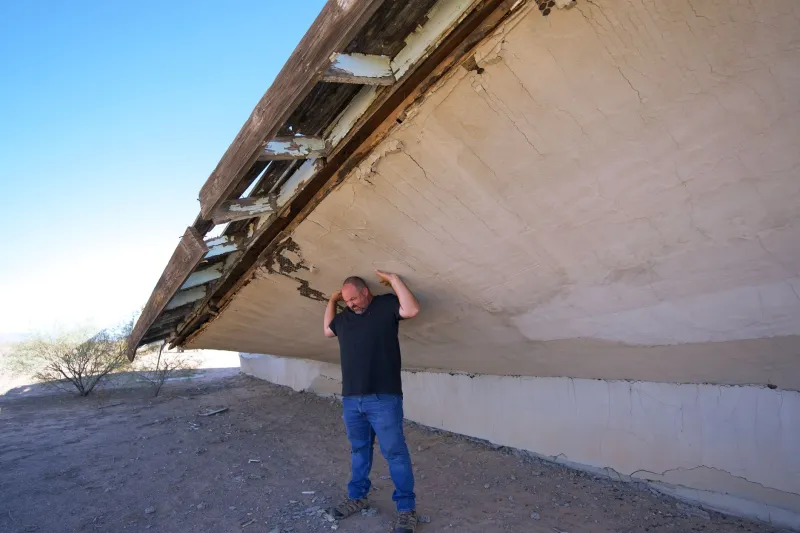
Stage three — the one that brings homeowners to the phone — is visible structural movement. Floors develop noticeable bounce or deflection. Interior doors begin to bind in their frames. Gaps appear between baseboards and flooring. In homes with masonry piers or wood posts supporting the main beam, those supports may themselves have deteriorated, causing the beam to drop and the floor system above to follow.
What makes this progression particularly costly is that each stage accelerates the next. Mold weakens wood surface integrity. Weakened wood absorbs moisture faster. Faster moisture absorption accelerates decay. Structural movement then creates new pathways for water intrusion at the foundation perimeter, introducing an entirely new set of problems at the footing level.
Warning Signs Homeowners Consistently Miss
The challenge with crawl space deterioration is that its early indicators are easy to rationalize away. A slightly springy floor is attributed to an older home's character. A faint musty smell is blamed on seasonal weather. By the time these symptoms become impossible to ignore, the repair scope has expanded considerably.
Several specific indicators warrant immediate investigation:
- Persistent musty or earthy odors inside the home, particularly near the floor, that do not resolve after airing out the house
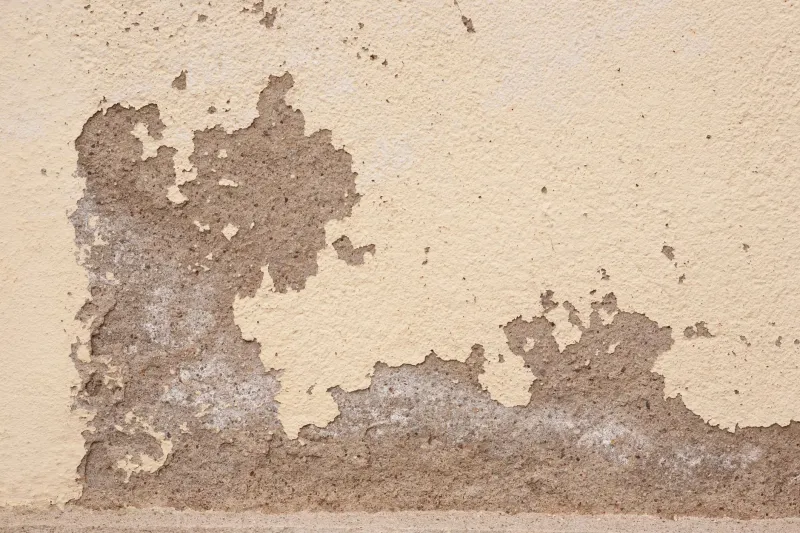
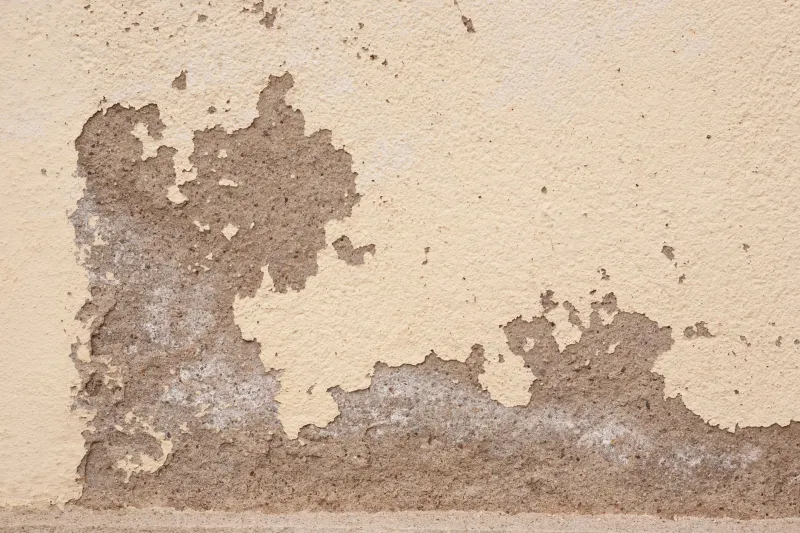
- Visible efflorescence — white, chalky deposits — on interior foundation walls, indicating water is moving through masonry
- Allergy or respiratory symptoms among occupants that worsen indoors and improve outdoors, suggesting elevated mold spore counts
- Flooring that feels soft, spongy, or uneven in specific zones, especially near exterior walls
- Pest activity, including termites or wood-boring beetles, which are drawn to moisture-softened wood
- Condensation on ductwork or pipes running through the crawl space, visible during summer months
Any one of these observations justifies a professional crawl space inspection. Together, they constitute an urgent call to action.
Why Encapsulation Is a Stabilization Strategy, Not an Upgrade
Crawl space encapsulation — the process of sealing the crawl space from ground moisture and exterior air infiltration using heavy-gauge vapor barriers, sealed vents, and often a dedicated dehumidification system — is sometimes positioned as a premium home improvement. That framing undervalues what encapsulation actually accomplishes.
From a structural engineering standpoint, moisture control in a crawl space is load-bearing work. By eliminating the conditions that cause wood decay, encapsulation preserves the structural capacity of floor framing, reduces the likelihood of support post deterioration, and stabilizes the soil environment immediately beneath the foundation. In regions with expansive clay soils, maintaining consistent soil moisture levels beneath the structure can also reduce differential settlement — the type of uneven foundation movement that produces cracked walls and out-of-plumb door frames.
At Willow Branch Stabilization, we incorporate crawl space assessment into every residential foundation evaluation precisely because the two systems are inseparable. A foundation repair that addresses footing movement without correcting the moisture conditions contributing to wood decay above it is an incomplete solution. Conversely, encapsulation performed without addressing any existing structural damage leaves compromised framing in place beneath a sealed environment.
A comprehensive approach typically involves: removing existing mold-affected material where necessary, replacing or sistering deteriorated joists, installing a continuous vapor barrier across the crawl space floor and up the foundation walls, sealing all vents and penetrations, and introducing mechanical dehumidification to maintain relative humidity below 60 percent year-round.
The Financial Argument for Acting Early
The cost differential between early intervention and delayed response in crawl space moisture situations is substantial. A vapor barrier installation combined with a dehumidifier — addressed before structural damage develops — represents a fraction of the investment required once floor framing must be replaced, support posts rebuilt, and foundation movement corrected.
Beyond direct repair costs, moisture-related structural damage affects property value, homeowner's insurance eligibility, and mortgage qualification. Buyers' inspectors routinely access crawl spaces, and evidence of active mold or wood decay can derail a sale or trigger significant price renegotiation.
The ground beneath a home is not static, and neither is the air within the spaces closest to it. Addressing crawl space moisture is not a cosmetic concern — it is a structural investment that protects the stability of everything built above it. If your home has a crawl space that has not been professionally evaluated in the past several years, that inspection is worth scheduling before the signs become impossible to miss.