Confidence Built on Sand: Why At-Home Soil Assessment Methods Leave Property Owners Dangerously Unprepared
The Appeal of the Do-It-Yourself Diagnosis
There is something deeply reassuring about the idea that a glass jar, a garden hose, and thirty minutes of observation can tell you whether your property is sitting on stable ground. Across home improvement forums, YouTube channels, and real estate blogs, at-home soil assessment methods have accumulated a devoted following. They are inexpensive, accessible, and—critically—they produce results that feel authoritative.
The mason jar test, in which a soil sample is shaken in water and allowed to settle into visible layers, is perhaps the most widely cited. Homeowners interpret the ratio of sand, silt, and clay as a reliable indicator of how their soil will behave under the weight of a structure. Drainage assessments, typically performed by observing how quickly standing water absorbs into the ground after rain, are similarly popular. Both methods have a veneer of scientific legitimacy. Both are profoundly inadequate for evaluating structural risk.
At Willow Branch Stabilization, we have worked with property owners who arrived at consultations genuinely convinced their soil was stable—because a mason jar had told them so. The gap between that conviction and what our geotechnical assessments revealed is, in many cases, the gap between a manageable repair and a six-figure structural failure.
What At-Home Methods Actually Measure
To be fair, the mason jar test does measure something. It identifies the approximate textural composition of a surface soil sample. The problem lies in what that measurement cannot capture.
First, the test addresses only the sample collected—typically from the top few inches of the yard. Soil composition can change dramatically with depth. A layer of expansive clay that causes significant foundation movement may sit two, three, or four feet below a surface sample that looks perfectly balanced in a jar. The test offers no insight into what exists at load-bearing depths.
Second, soil texture is only one variable in a complex equation. Moisture content, compaction levels, bearing capacity, shrink-swell potential, organic matter concentration, and the presence of voids or subsurface channels all influence how soil behaves under structural load. None of these factors appear in a settled jar of water.
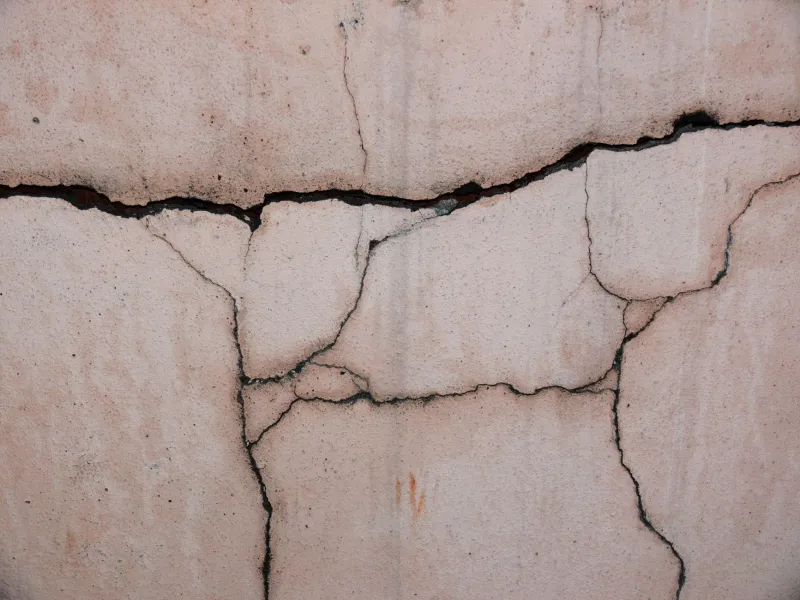
Drainage observation tests carry similar limitations. Watching water pool or dissipate on a lawn after rainfall tells you something about surface permeability but nothing about subsurface drainage pathways, seasonal water table fluctuations, or the hydraulic pressure that water may be exerting against a foundation wall. These are precisely the conditions that cause slow, progressive structural damage—the kind that announces itself not in sudden dramatic failure, but in hairline cracks that widen incrementally over years.
The Variables That Only Professionals Can Measure
Professional soil stabilization assessments operate in an entirely different realm of specificity. A geotechnical engineer evaluating a residential or commercial property typically employs a combination of methods calibrated to the actual questions that matter for structural safety.
Boring and sampling allows technicians to collect soil specimens from multiple depths, providing a stratigraphic profile of what lies beneath the surface across the entire load-bearing zone. Laboratory analysis of these samples measures Atterberg limits—the moisture thresholds at which a soil transitions between liquid, plastic, and solid states—which directly predicts how the soil will behave as seasonal moisture levels fluctuate.
Standard penetration testing quantifies the resistance of soil at various depths, producing a direct measure of bearing capacity. This number answers a question that no mason jar can approach: will this soil support the structure built upon it, and under what conditions might it cease to do so?
Electrical resistivity surveys and ground-penetrating radar can identify subsurface voids, buried organic material, and drainage anomalies that would be entirely invisible to surface observation. In regions with karst geology, expansive clay formations, or historical fill activity—conditions common across many parts of the American South, Midwest, and Southwest—these technologies are not optional refinements. They are fundamental to understanding what a property is actually sitting on.
The Risk Management Calculation
The argument against professional soil assessment is almost always financial: it costs money that a homeowner would prefer not to spend, particularly when surface conditions appear benign. This reasoning inverts the actual risk calculation.
Consider that a geotechnical assessment for a residential property typically ranges from several hundred to a few thousand dollars, depending on the scope of analysis and regional market rates. Foundation stabilization, once deferred to the point of significant structural compromise, routinely costs tens of thousands of dollars. In commercial properties or multi-family buildings, the figures scale accordingly.
The at-home methods that feel like savings are, in structural terms, a form of wishful thinking. They produce results that confirm the outcome the homeowner prefers—stability—without the capacity to detect the conditions that would contradict it. A mason jar cannot tell you that your home is safe. It can only tell you that you have not yet looked carefully enough to find evidence that it is not.
When Professional Assessment Is Non-Negotiable
Certain circumstances make professional soil analysis not merely advisable but essential. Properties in regions with expansive clay soils—including large portions of Texas, Oklahoma, Colorado, and the mid-Atlantic states—face inherent shrink-swell risk that surface observation cannot quantify. Homes built on or near historical fill areas, former agricultural land, or sites adjacent to significant grading activity require subsurface verification that the fill was properly compacted and is behaving predictably under load.
New construction sites, properties undergoing significant additions or second-story expansions, and buildings showing any visual indicators of foundation movement—including sticking doors, diagonal wall cracks, or uneven floors—all warrant professional evaluation before any remediation decisions are made.
The willow's roots reach deep into the ground, finding stability in what cannot be seen from the surface. Sound structural stewardship demands the same commitment to depth. At-home soil tests offer the comfort of an answer without the rigor of a genuine question. Professional assessment asks the right questions—and delivers the kind of certainty that a property's long-term structural health actually requires.