Your Neighbor's Problem Is Closer Than You Think: The Hidden Way Foundation Failures Travel Across Property Lines
The Invisible Connections Beneath Every Neighborhood
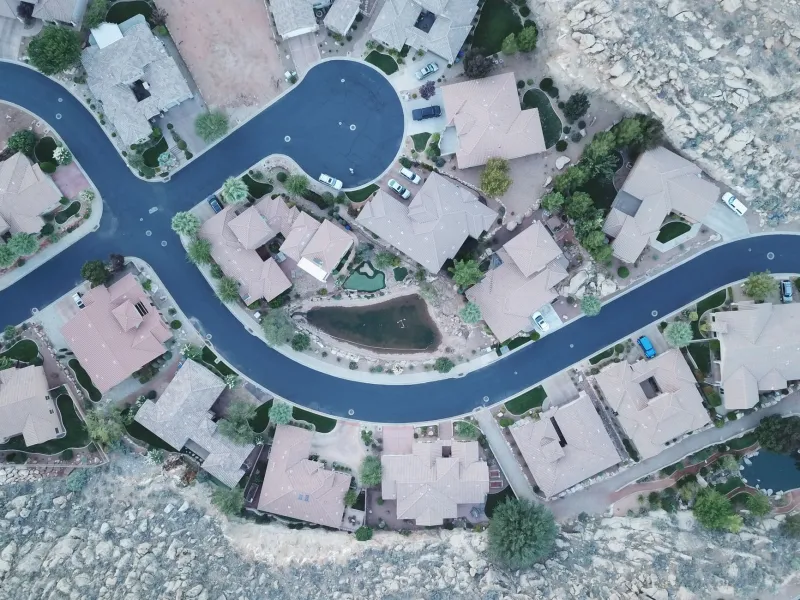
When a homeowner in a residential subdivision discovers that their foundation has begun to settle, the instinct is to look inward—to examine their own drainage, their own soil, their own maintenance history. This is a reasonable response, but it is often an incomplete one. Beneath the neat geometry of property lines, survey markers, and fence posts, soil behaves as a continuous medium. Water moves through it without consulting deed records. Settlement in one location redistributes stress to adjacent areas. The structural health of one parcel is, to a degree that most property owners do not fully appreciate, intertwined with the health of the parcels surrounding it.
This is not a theoretical concern. At Willow Branch Stabilization, we have evaluated properties where the primary driver of foundation distress was not anything the current owner had done or failed to do—but rather a pattern of deferred maintenance, altered drainage, or subsurface soil disturbance originating on an adjacent lot. The implications for property owners, particularly those in densely developed neighborhoods and older subdivisions, are significant.
How Soil Movement Crosses Boundary Lines
The mechanisms by which foundation problems migrate from one property to another are several, and they often operate simultaneously.
Lateral soil pressure and slope creep occur when soil on an elevated or sloped adjacent property begins to move downhill under the influence of gravity and moisture. This movement exerts lateral pressure against foundation walls and footings on lower-lying neighboring properties. In subdivisions with variable lot grading—common in developments built across rolling terrain throughout the Southeast, Mid-Atlantic, and Pacific Northwest—this dynamic can cause progressive foundation wall deflection in homes that appear to be on otherwise stable ground.
Subsurface drainage redirection is perhaps the most common mechanism. When a neighboring property alters its grading, installs improperly directed downspout extensions, or allows drainage infrastructure to fail, the resulting water volume is redirected—often toward adjacent properties. Chronic moisture saturation of soil beneath a neighboring foundation weakens its load-bearing capacity, but the water does not stop at the property line. It continues to move through the soil column, elevating moisture content, promoting clay expansion, and undermining the bearing capacity of footings on adjacent parcels.
Void formation and sinkhole propagation represent a more dramatic but not uncommon scenario. When subsurface voids develop beneath one property—due to deteriorating utility lines, dissolution of soluble rock formations, or the decomposition of buried organic material—the resulting settlement can propagate laterally through connected soil strata. Properties in karst-prone regions of Florida, Tennessee, Missouri, and Pennsylvania are particularly susceptible to this form of migrating instability.
Excavation and construction activity on neighboring properties frequently creates temporary but significant disturbances to adjacent soil stability. Deep excavations can cause lateral soil movement, dewatering operations can lower the local water table and trigger settlement in neighboring structures, and vibration from heavy equipment can disturb loosely consolidated soils or existing void structures beneath adjacent foundations.
The Deferred Maintenance Multiplier
In residential neighborhoods where homes were built within the same development cycle—often within a few years of each other, using similar construction techniques and materials—foundation issues tend to cluster. This clustering is partly attributable to shared soil conditions and partly to the synchronous aging of infrastructure. But it is also driven by a dynamic that might be called the deferred maintenance multiplier.
When one property owner delays addressing foundation movement, deteriorating drainage infrastructure, or soil stabilization needs, the unresolved instability does not remain contained. It becomes a source of ongoing stress to the soil system shared with neighboring properties. If those neighbors are similarly deferring maintenance—a pattern common in neighborhoods where homes and homeowners are aging together—the cumulative effect on the shared soil environment can be substantially greater than the sum of the individual issues.
This is not a question of assigning blame. It is a structural reality that has significant implications for how property owners should think about their relationship to the broader neighborhood environment.
What Proactive Owners Can and Cannot Control
A property owner cannot compel a neighbor to address foundation issues, and the legal pathways for recovering damages caused by a neighbor's deferred maintenance are often uncertain, expensive, and slow. Prevention, therefore, is the more practical framework.
Monitoring your own property's response to neighboring conditions is a reasonable starting point. If a neighboring property undergoes significant excavation, grading changes, or new construction, it is worth scheduling a professional evaluation of your own foundation's condition before and after the activity—establishing a documented baseline that would be valuable if future claims become necessary.
Managing your own drainage aggressively reduces your property's vulnerability to moisture migration from adjacent parcels. Properly graded lots, functional gutters and downspout extensions, and subsurface drainage systems that direct water away from your foundation create a meaningful buffer against conditions you cannot directly control next door.
In some cases, property owners in subdivisions with documented shared soil instability have pursued coordinated stabilization approaches—working with structural engineers and soil stabilization specialists to address subsurface conditions across multiple properties simultaneously. This approach, while requiring cooperation and coordination, produces more durable outcomes than piecemeal repairs that address symptoms without resolving the underlying soil dynamics.
Thinking Beyond the Property Line
The willow tree is an apt emblem for this reality. Its root system extends far beyond the canopy visible above ground, drawing water and nutrients from a wide radius—and, in doing so, affecting the moisture and stability of the soil across a broad area. Structural stability works similarly. The ground beneath a neighborhood is not a collection of isolated columns beneath individual homes. It is a shared system, and it behaves as one.
Property owners who understand this are better positioned to protect their investment. They monitor conditions on adjacent properties with informed attention. They maintain their own drainage and soil stabilization not merely as private maintenance but as a form of infrastructure stewardship that benefits the broader soil environment. And they engage professional assessment early—before the movement that began next door has had sufficient time to arrive at their own foundation.